From July 17 to 20, 2026, the World Artificial Intelligence Conference (WAIC 2026) and the High-level Meeting on Global AI Governance will be held in Shanghai, People’s Republic of China. The event is considered one of the most important international platforms for discussing the future of artificial intelligence (AI), establishing a global governance framework, sharing innovations, and strengthening international cooperation.
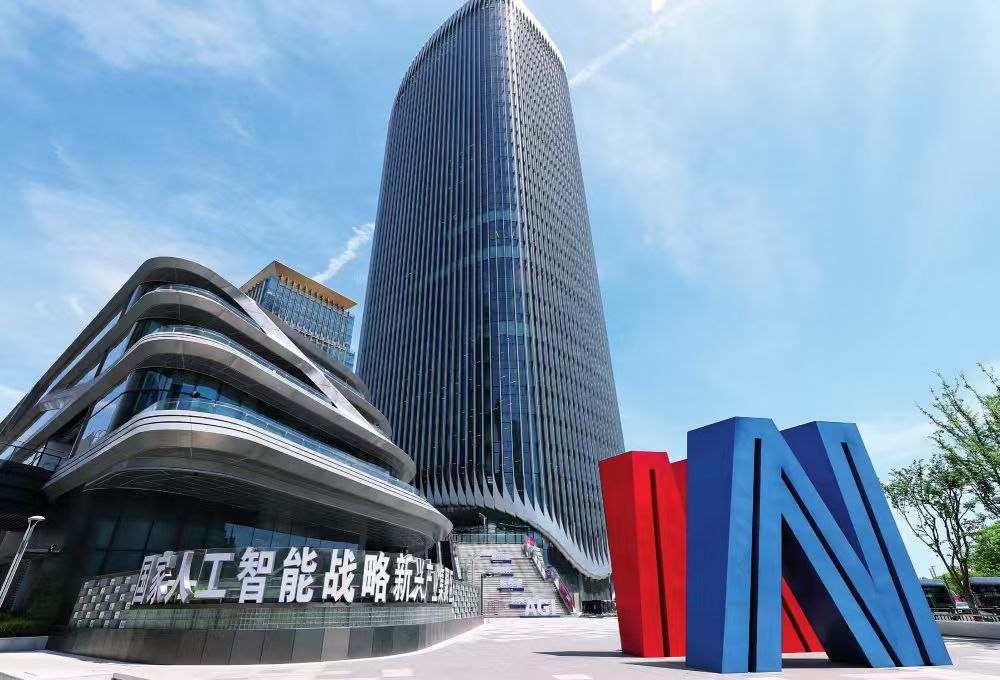
In the context where AI is becoming the core technology of the Fourth Industrial Revolution, countries are competing in terms of technology, capital, investment, data, and human resources. The 2026 World AI Conference is an important conference because it is a platform that brings together global leaders, leading AI companies, scientists, international organizations, research institutions, and technology investors. The gathering of these stakeholders will promote the search for common solutions for the safe, responsible, and sustainable development of AI.
Artificial intelligence currently creates both opportunities and risks that require good and ethical governance. Key issues include data protection, cybersecurity, Deepfake, AI Weaponization, AI Ethics, Algorithm Bias, and human labor displacement. Therefore, the establishment of a global governance framework is an urgent issue, and China is currently taking the lead in leading and managing
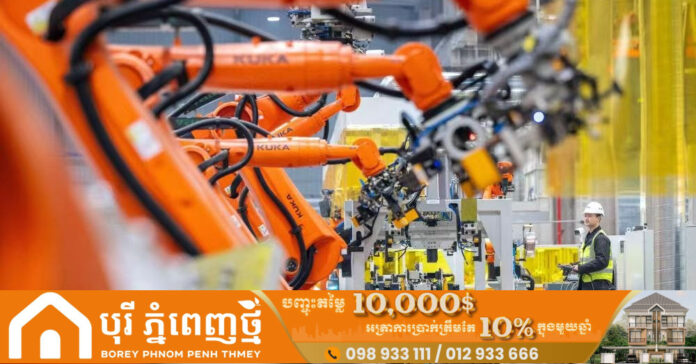
on the issue of artificial intelligence, raising key principles including AI for Good, AI for All, Inclusive AI, Open Cooperation, and Shared Benefits. These principles are consistent with the concept of “a community with a shared future for mankind”, which emphasizes common development, respect for the sovereignty of each country, and sharing the benefits of new technologies without leaving developing countries behind. In recent years, China has made rapid progress in large language models, robotics, intelligent manufacturing, autonomous driving, AI chips, smart healthcare, and smart cities. At the same time, China is also a country with a high number of AI patents, many AI unicorns, large-scale AI investments, and extensive AI applications in the public sector. In addition to technological development, China also focuses on setting standards and regulations for AI, encouraging international cooperation rather than dividing into technology blocs. This view is consistent with Xi Jinping Thought on Socialism with Chinese Characteristics for a New Era, which promotes the establishment of a global governance system that is open, inclusive and based on win-win cooperation.
Meanwhile, the invitation of His Excellency Hun Sen, Prime Minister of the Kingdom of Cambodia, not only demonstrates Cambodia’s attention to the digital technology revolution, but also reflects Cambodia’s commitment to participating in the global governance of artificial intelligence and the promotion of the digital economy in line with the Pentagon’s Phase 1 Strategy. This participation also shows that Cambodia does not want to be a follower of the AI revolution, but wants to be an active participant, where AI can help Cambodia in the fields of smart agriculture, health, education, government, digital governance, tourism, industry, finance, customs and taxation. The 2026 World AI Conference is a gathering of the world’s major technology companies, especially Chinese companies, which will enable Cambodia to establish cooperation on data centers, digital infrastructure, AI Startups, Cloud Computing, and supporting industries for semiconductor manufacturing, especially under Cambodia-China cooperation.
As expected for countries around the world in general and for Cambodia in particular, the event is expected to promote Cambodia-China cooperation on artificial intelligence, digital economy, smart cities, digital government, digital trade, and digital connectivity. Under the guise of this cooperation, Cambodia and China can also cooperate in establishing artificial intelligence laboratories, innovation centers, joint research centers, AI talent programs, digital industrial parks, and startup incubators. At the same time, Cambodia can participate in setting standards, policy discussions, ethical use of AI, protecting personal data, and creating regulations for AI to ensure that technological development balances innovation, security, and citizens’ rights.
The 2026 World Conference on Artificial Intelligence and the High-Level Meeting on Global Governance of Artificial Intelligence are events that are more than just a showcase of technological achievements. They are a platform for setting the direction for AI development and shaping global governance in the digital age. For Cambodia, the Prime Minister’s participation demonstrates his commitment to seize the opportunities of the AI revolution and contribute to building an open, modern, and cooperative global governance. If Cambodia can translate political engagement into practical cooperation on human resource development, technology transfer, investment attraction, and building a responsible AI governance framework, this event will be an important starting point and a global model for promoting the digital economy, enhancing national competitiveness, and contributing to building a community with a shared future for humanity through the safe, equitable, and sustainable use of artificial intelligence.
By Dr. Ki Sereyvath, President of the Institute of Chinese Studies, Royal Academy of Cambodia
This site is translated by Google Translate™