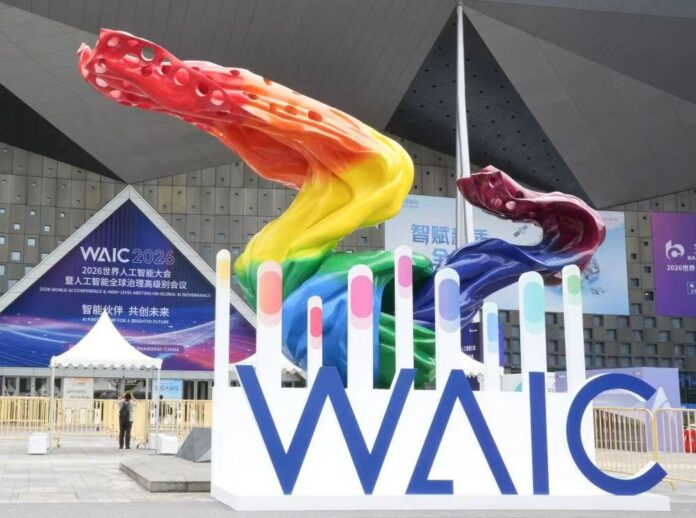
With the visionary thinking that artificial intelligence (AI) is a “double-edged sword” that can create both opportunities and risks if not managed effectively, the 2026 World Artificial Intelligence Conference (WAIC) and the High-Level Meeting on Global Governance of AI will be held in Shanghai from July 17 to 20, 2026. It will become an important international platform for discussing the future of AI technology and building a global governance system that can ensure that AI develops in a safe, fair, and beneficial direction for all humanity.
Indeed, AI is a major driving force of the scientific and technological revolution in the new era, through which China will transform the economic, social, and civilizational structures of humanity by building a global AI governance based on cooperation, openness, and mutual benefit. This has become a strategic concept for the international community, with China focusing on “AI for humanity” to provide a new direction for global technological development. China has shared a clear signal that instead of competing in technology, AI should be shared as a public good that can benefit all countries. Development-promoting policies
Open source systems, experience sharing, human resource training, and capacity building for developing countries can really help narrow the technology gap between developed and developing countries.
As a contribution to humanity, China has always contributed to all countries, especially countries in the global South, being able to use AI more easily to enhance the strength of education, health, agriculture, and especially disaster management systems, which will have greater positive effects on improving public services with people-centered interests in line with the vision of Xi Jinping’s philosophy. In this practical sense, The “Global AI Governance Initiative” initiated by China will continue to support the role of the United Nations and the proposal to establish a global AI cooperation organization, with the common goal of establishing common standards for AI development to prevent the use of technology in directions that may harm security, human rights, and international stability.
As a united force, the 2026 World Conference on Artificial Intelligence is not only a platform to showcase technological achievements, but also an important platform to chart the future direction of global AI governance. Xi Jinping’s philosophy of developing AI in a safe, fair, open, and mutually beneficial manner emphasizes that technology should serve humanity, not create divisions or widen the development gap. This philosophy is a Chinese wisdom that reflects the promotion of multilateralism.
It provides an opportunity for all countries to participate in setting rules and principles for joint management of AI, without leaving any major power or major technology company to decide on its own. This clearly demonstrates China’s open stance in building bridges of cross-border cooperation, sharing development experiences, exchanging advanced technologies, and achieving mutual benefits, and reflects China’s high responsibility in promoting the building of a community with a shared future for mankind.
By Dr. Chea Monirith | President of the Cambodia-China Development Research Association
This site is translated by Google Translate™