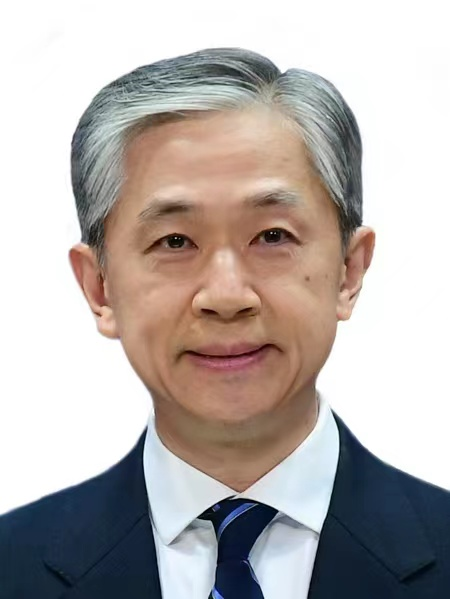
Wang Wenbin, Ambassador Extraordinary and Plenipotentiary of the People’s Republic of China to the Kingdom of Cambodia
In October 2025, the 20th Central Committee of the Communist Party of China (CPC) convened its fourth plenary session in Beijing, which reviewed and adopted the Recommendations of the Central Committee of the Communist Party of China for Formulating the 15th Five-Year Plan for National Economic and Social Development, outlining an overarching blueprint for China’s development over the next five years. This is yet another general mobilization and comprehensive deployment to build on the momentum and continue to advance Chinese modernization, one that will have a significant and profound impact on China’s development, and bring broad opportunities for China-Cambodia cooperation.
The scientific formulation and consistent implementation of five-year plans is part of the invaluable experience of the CPC in governing the country and managing state affairs. Step by step since 1953, China has worked through 14 five-year plans to transform itself from a poor and weak agrarian country into the world’s largest manufacturer and the second largest economytoday, as is shown in the series of new achievements made during the 14th Five-Year Plan period. For instance, China’s economy has exceeded 140 trillion yuan (about 20 trillion dollars), proving to be a major engine driving global growth with around 30% of annual contribution to economic growth in the world for years on end. Fueling the high-quality development are scientific and technological innovations, underpinned by the fact that China’s total R&D expenditure has long been the second largest in the world. A total of 5.01 millionvalid invention patents have been generated as a result. In addition, China has eradicated absolute poverty for the first time in the nation’s history, and bettered its people’s well-beingcontinuously with the nationwide per capita disposable income rising from 32,000 yuan (4,675 dollars) in 2020 to 41,000 yuan(5990 dollars) in 2024.
Building on such achievements, China has set the following major economic and social development objectives for the 15th Five-Year-Plan Period (2026-2030): significant advancements in high-quality development, substantial improvements in scientific and technological self-reliance and strength, fresh breakthroughs in further deepening reform comprehensively, notable cultural and ethical progress across society, further improvements in quality of life, major new strides in advancing the Beautiful China Initiative, further advances in strengthening the national security shield.
China will further promote high-standard opening-up, create new horizons for mutually beneficial cooperation, and work for the building of a community with a shared future for humanity. China will work with neighboring countries to advance integrated development, strengthen common security, consolidate strategic mutual trust, and jointly create a better future with neighboring countries. As China continues to advance its modernization drive, broad opportunities will certainly ensue for the shared development of all countries. A China that is committed to peace and development undertakings will show greater commitment to human progress. People of vision around the world are generally optimistic about the bright prospects of China’s development in the 15th Five-Year Plan period, convinced that partnering with China is partnering with opportunities.
China and Cambodia are ironclad friends, comprehensive strategic partners, and fellow companions on the path ofmodernization. The year 2026 is the beginning of the 15th Five-Year Plan period, and also a crucial year for building an all-weather China-Cambodia community with a shared future in the new era. Seizing the opportunities, China is willing to share with Cambodia development opportunities in the following three areas to improve and upgrade practical cooperation.
First, opportunities from market opening up. Over the next five years, China will work to build a new system for higher-level open economy, which is to deepen the opening up for the free flow of goods and factors of production to one on an institutional level in areas such as rules, regulations, management and standards. This will provide a solid institutional guarantee of continuous and stable entry into the Chinese market for Cambodian agricultural and specialty industrial products. China and Cambodia can better integrate the China-Cambodia Free Trade Agreement (CCFTA) and the Regional Comprehensive Economic Partnership (RCEP) with China’s institutional opening-up policies to further enhance bilateral trade facilitation.
Second, opportunities for synergized industrial development. China’s demands for industrial upgrading are highly compatiblewith Cambodia’s development strategies as the latter commits itself to economic diversification. China’s vigorous efforts to build a modern industrial system led by technological innovation will create conditions for production capacity cooperation with Cambodia to expand from traditional agriculture and textiles to areas such as digital economy, green energy, new energy vehicles, and modern agricultural technologies. The two sides can carry out in-depth cooperation in photovoltaic components, power batteries, e-commerce, and smart agriculture in the future.
Third, opportunities for better connectivity. China will continue to pursue high-quality Belt and Road cooperation. With Cambodia being an important partner in the Belt and Road, our two countries can accelerate infrastructure connectivity in such areas as transportation, logistics and energy through cooperation projects including port construction, road upgrades, and power grid interconnection. This will significantly reduce Cambodia’s domestic and cross-border logistics costs, and further unleash the country’s potential as a transportation hub in the region.
In conclusion, China’s efforts for institutional opening-up, building a modern industrial system, and the high-quality Belt and Road cooperation will bring immense opportunities to Cambodia and many other countries. We do hope and believe that Cambodia and China could work together to open up new prospects for the “Diamond Hexagon” cooperation, and inject fresh impetus into building an all-weather China-Cambodia community with a shared future in the new era.
This site is translated by Google Translate™