
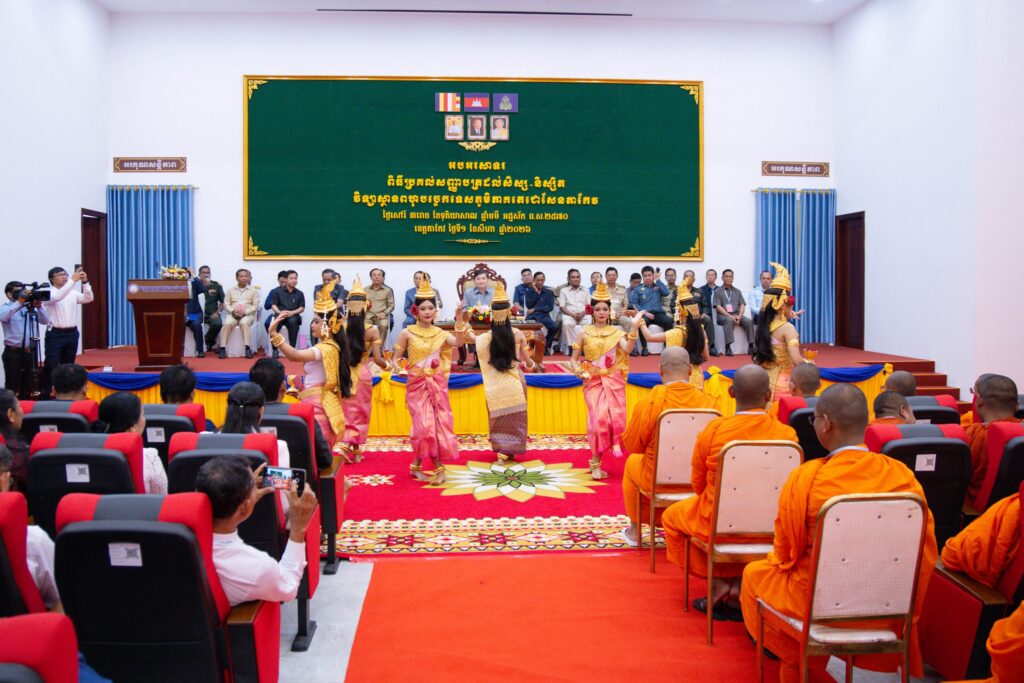
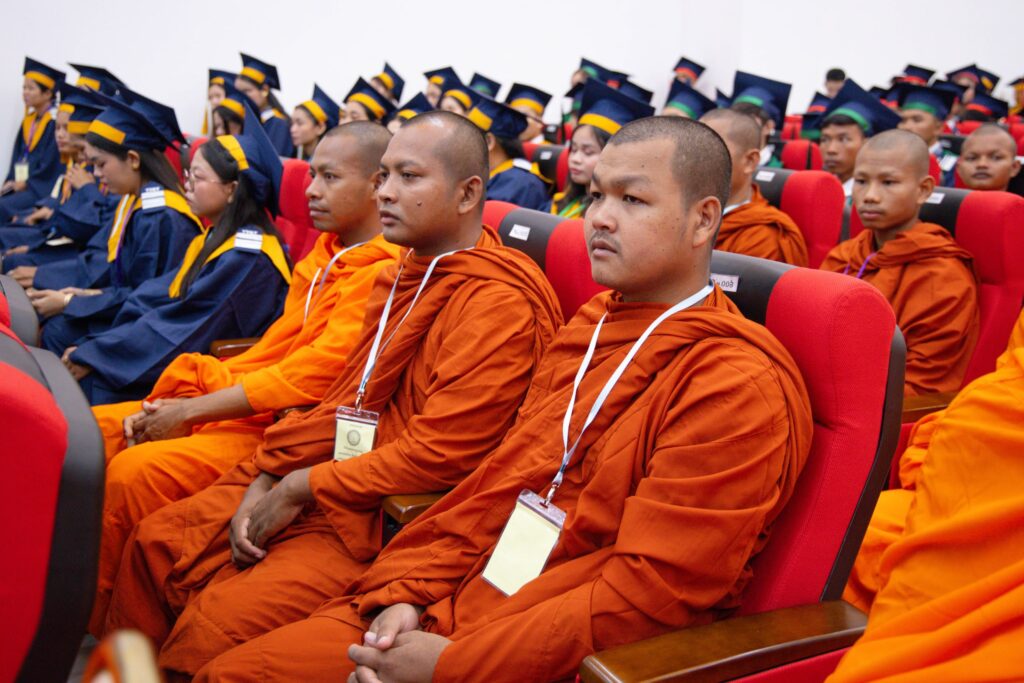
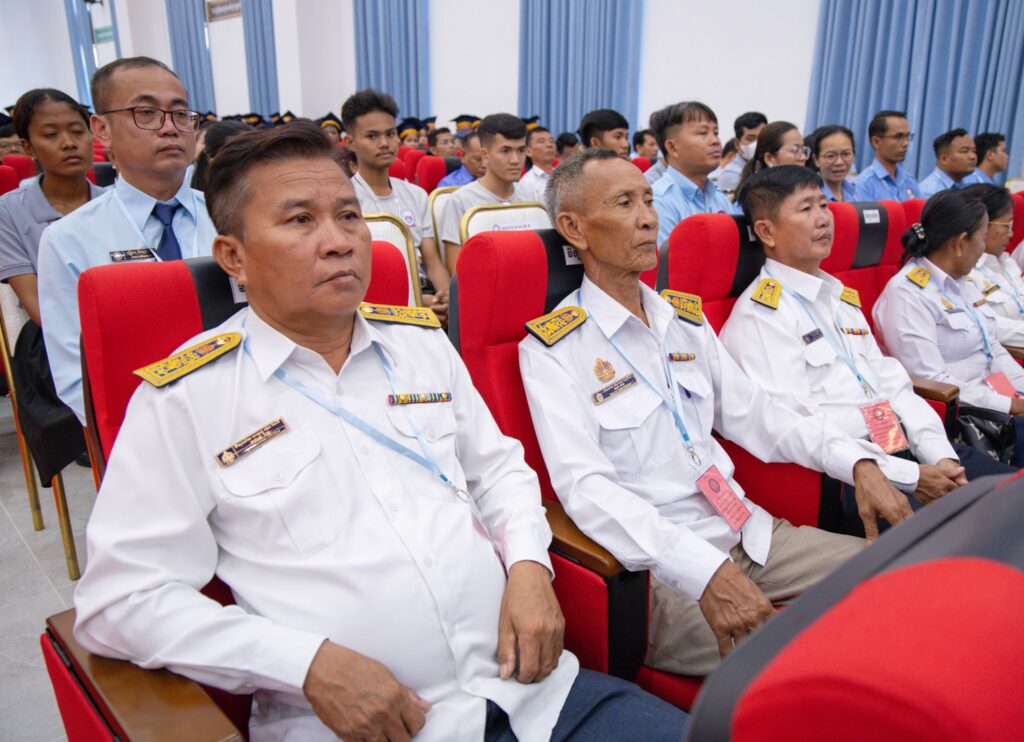
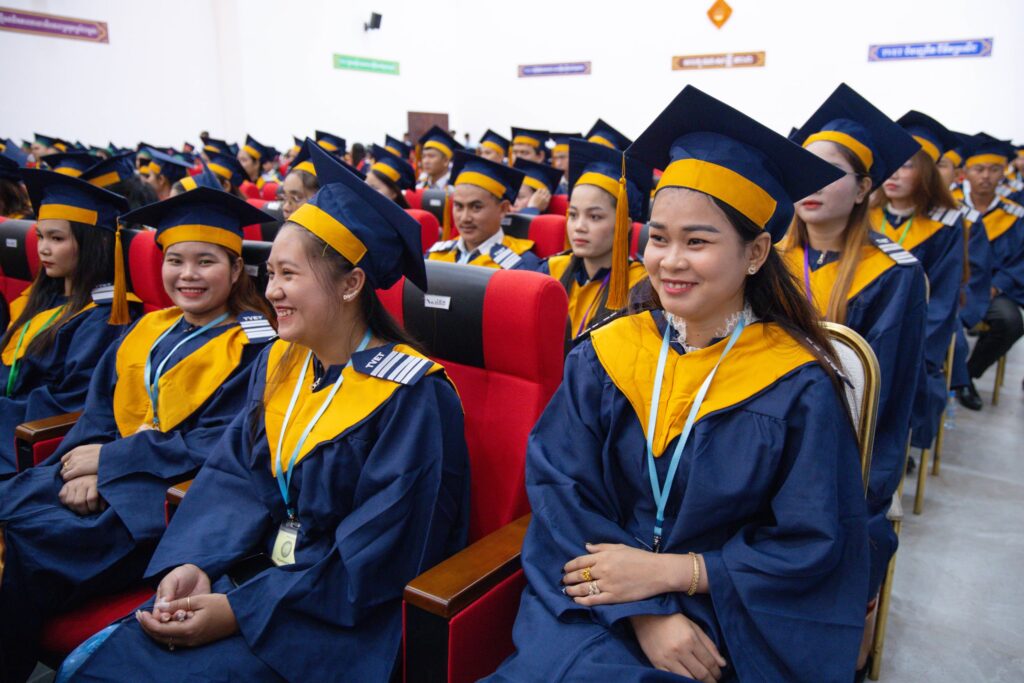
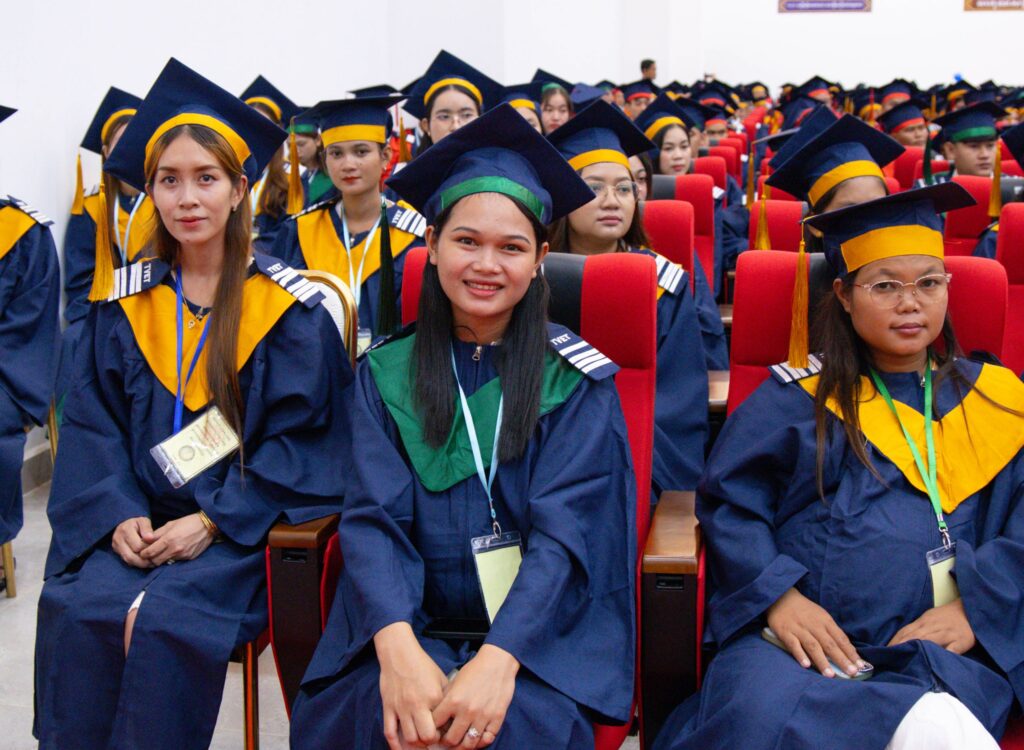
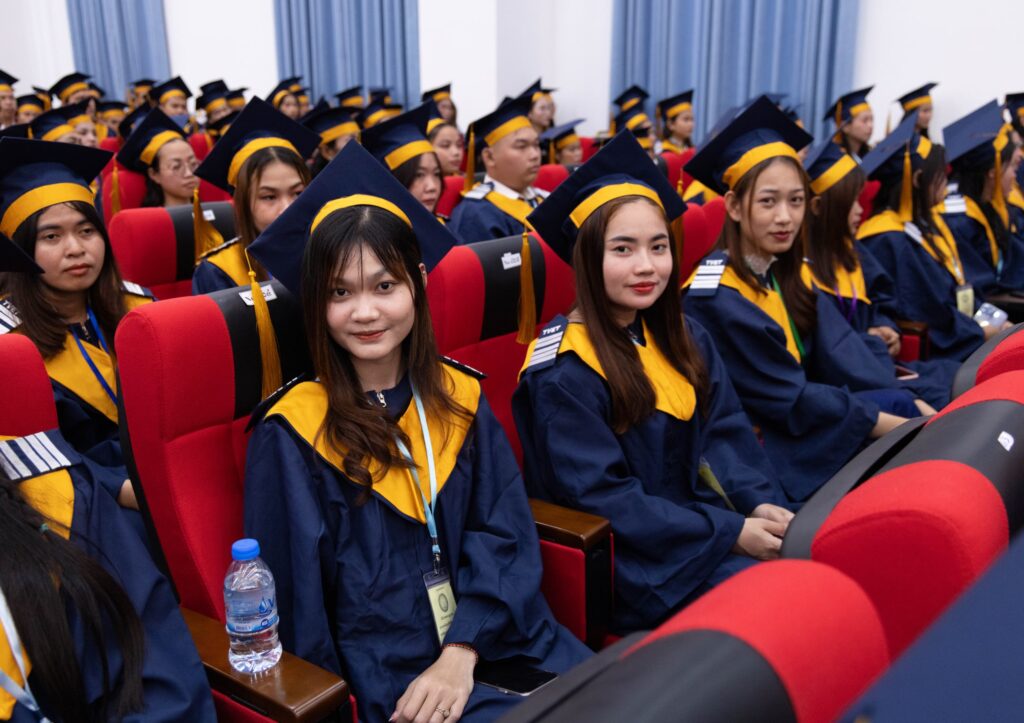
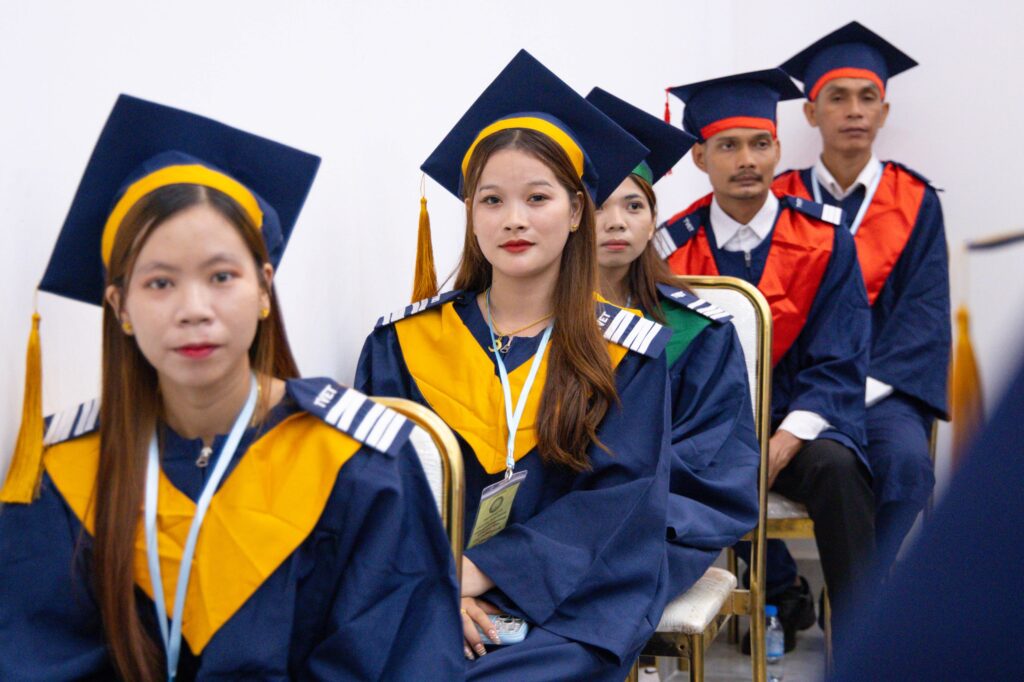
Takeo: Mr. Heng Sour, Minister of Labor and Vocational Training, presided over the graduation ceremony for 590 students (277 female) who won the 2014-2025 academic year out of a total of 16,041 graduates at the Polytechnic Institute of Techo Sen, Takeo on the morning of August 1, 2026, including technical and vocational diplomas at levels 1, 2, 3, higher technical diplomas, and technical bachelor’s degrees.
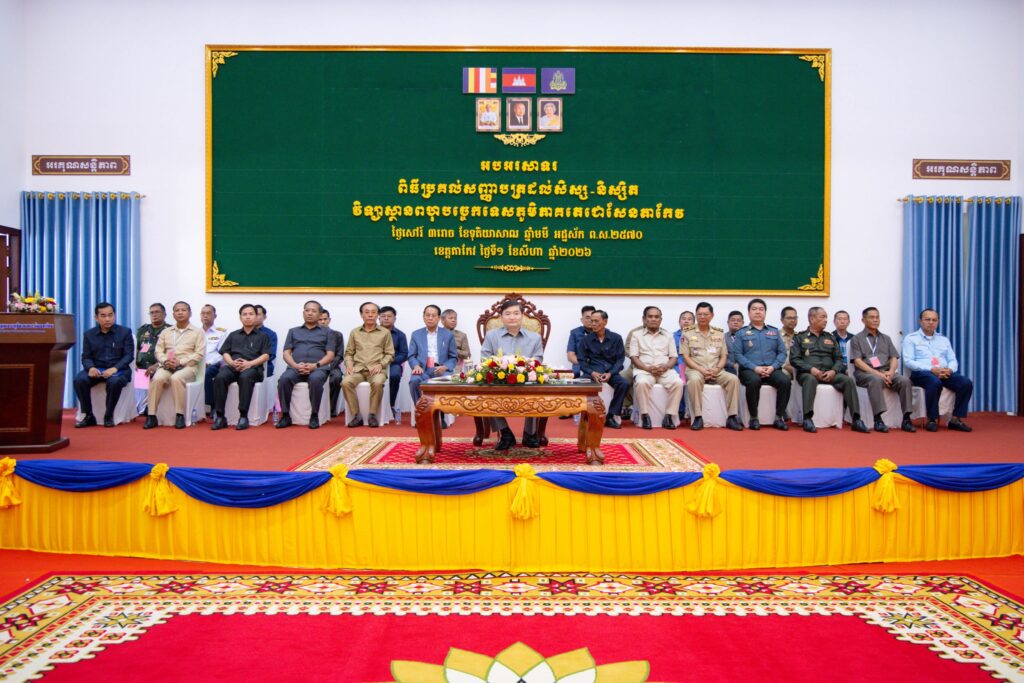
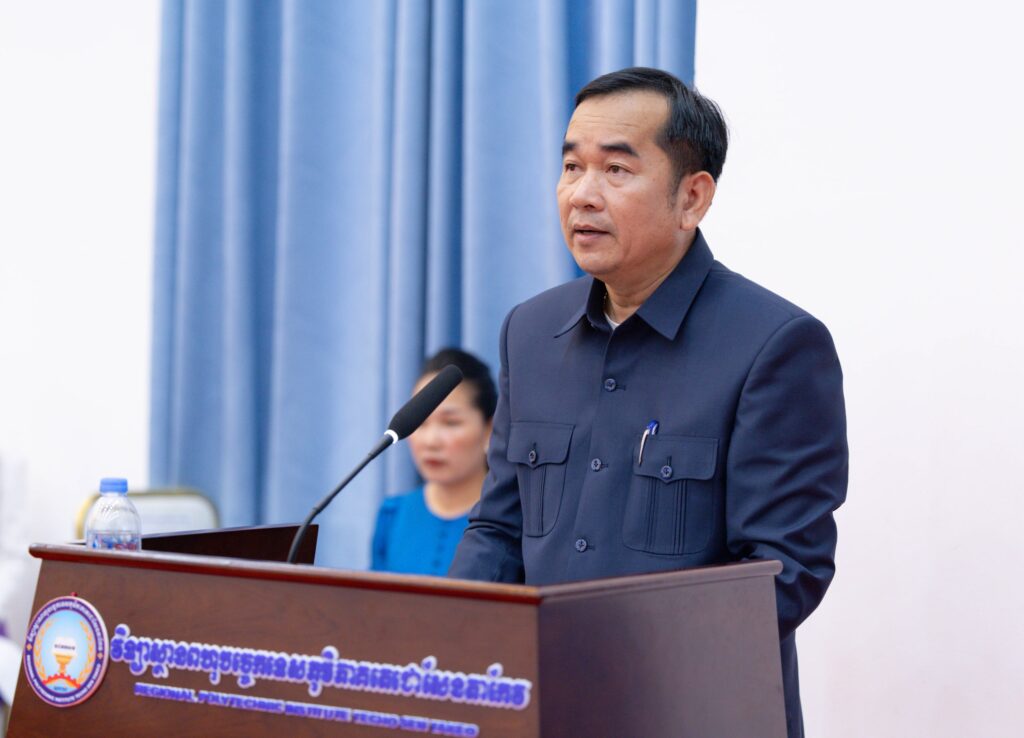
Speaking to the more than 800 participants, the Minister congratulated the winning students and highly appreciated the proud achievements of the institute, which has fulfilled its role with great responsibility. This success comes from the right decision, trust, and high determination to graduate by embracing Technical and Vocational Education and Training (TVET) as a bridge to build the future of families and society, especially by participating in changing the “mindset” of the general public. Children, parents and guardians are witnesses to the powerful grassroots outreach that clearly demonstrates that TVET studies, especially the 1.5 million program, are a smart choice because the studies are short, flexible and quickly earn a salary to support families, meet labor needs and attract investment.
He highlighted that The achievements of the institute stem from the legacy of Samdech Akka Moha Sena Padei Techo Hun Sen, former Prime Minister, who has paid great attention to education since 1979. Currently, the TVET program is a priority in building the human capital of the Royal Government in the 7th mandate, under the wise leadership of Samdech Maha Bavorathi Hun Manet, Prime Minister, in paying great attention to ensuring a decent living for citizens and achieving the goal of “each citizen has at least one skill for life.” With human capital considered to be the breath of socio-economic-national progress, Samdech Thip Dei also recently stated that TVET is not a second-level education or not equivalent to a bachelor’s degree, but a valid skill that is valuable and truly meets the needs of the labor market both domestically and internationally. Level C1 is equivalent to grade 10, C2 to grade 11 and C3 to grade 12, which can be studied together one level at a time to be equivalent to the pre-primary level.
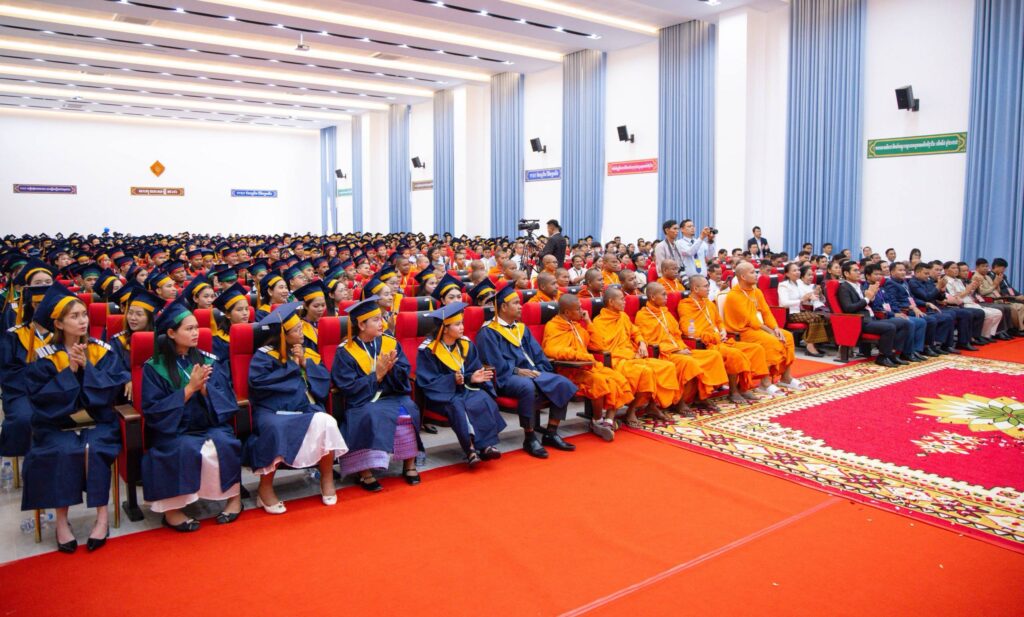
The Minister encouraged the students that the goal of education should not stop at obtaining a diploma or a job. But they must continue to develop themselves to reach higher positions and receive better salaries. Therefore, they must continue to learn in the world of work, the world of society, and the world of technology, especially artificial intelligence, in research and development of technical knowledge to improve work efficiency and contribute to achieving the vision of becoming a high-income country by 2050. In addition, it is necessary to strengthen soft skills such as teamwork, communication, coordination and management, as well as the ability to observe, learn and process the experiences of leaders and colleagues to improve their capabilities and continue to succeed.
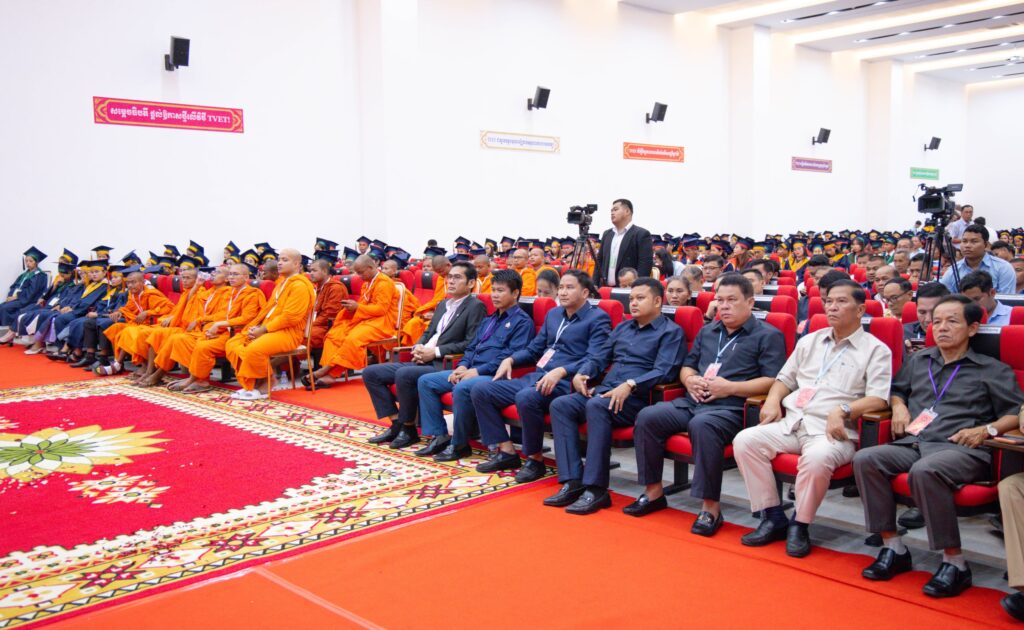
Mr. Heng Sour called on all relevant parties to continue to strengthen collaboration, raise awareness of the importance and promote the implementation of TVET programs To be more comprehensive and effective in order to build quality human capital, support investment and Cambodian socio-economic development. In addition, the institute’s leadership and teachers must continue to strengthen the quality of education by updating the curriculum to meet the needs of the skilled workforce and expanding partnerships with the private sector, which will also turn the institute into a place for study tours and sharing successful experiences.
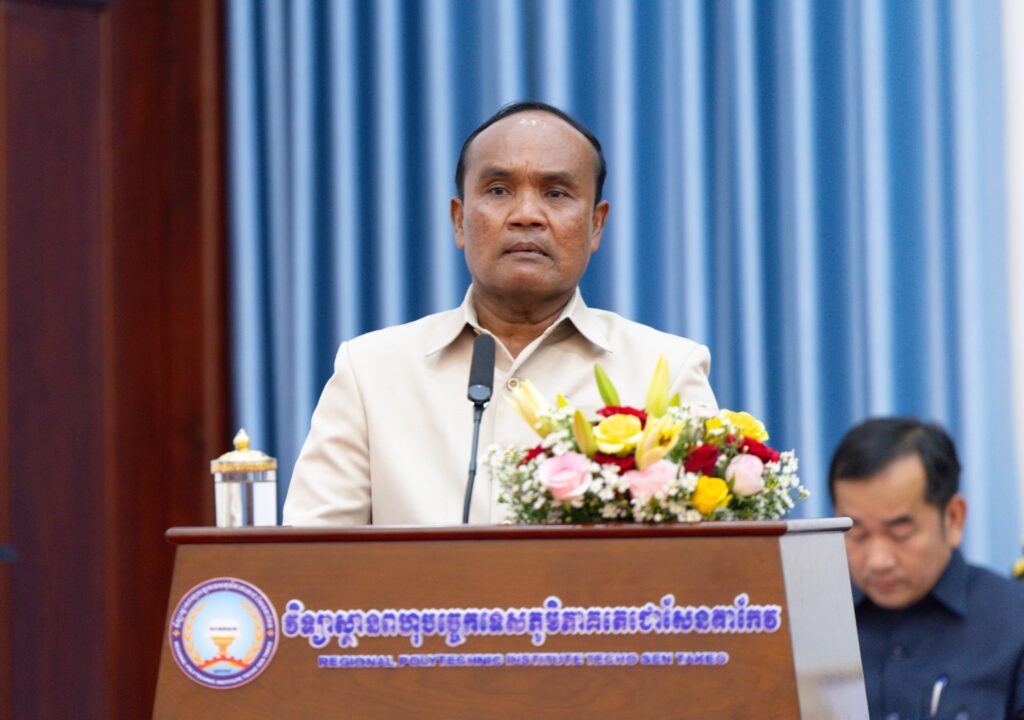
Mr. Aom Sophea, Deputy Governor of Takeo Provincial Government, said The institute plays a key role in providing skills and practical jobs to young people that help meet the province’s labor needs, improve family livelihoods, and reduce migration as the number of factories and enterprises increases.
Mr. Thu Sopheap, director of the Takeo Regional Polytechnic Institute, is committed to continuing to strengthen the quality of training, expand partnerships and enrollment at all levels, and develop curricula in line with technological developments and the practical needs of the evolving industry.
 </figure
 </figure
 </figure
This site is translated by Google Translate™