Phnom Penh: Dr. Ly Thuj, Senior Minister and First Deputy Chairman of the Cambodian Mine Action Authority, said that Cambodia is facing a new humanitarian burden from the Cambodia-Thailand border conflict in 2025, as explosive ordnance has affected nearly 4,000 square kilometers of land.
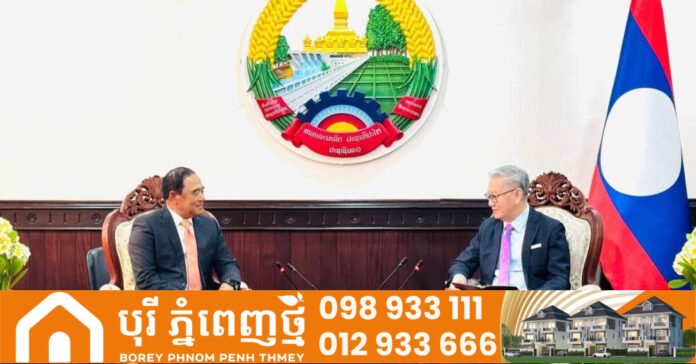
Dr. Ly Thuj’s remarks were made during a bilateral meeting with Mr. Thongsavan Phomvihane, Deputy Prime Minister and Minister of Foreign Affairs of Laos and Chairman of the Third Review Conference of the Convention on Cluster Munitions on September 13, 2026 at the Lao Ministry of Foreign Affairs.
During the meeting, Mr. Thongsavan Phomvihane discussed cooperation and sharing of experiences between the two countries in addressing the issue of explosive ordnance, especially munitions remnants. Cluster munitions from the Vietnam War.
Dr. Ly Thuc highlighted the traditional friendship and long-standing diplomatic relations between Cambodia and Laos, and praised the progress and resilience of the Lao government and people in dealing with explosive remnants of war, especially cluster munitions.
He shared that over the past three decades, Cambodia has cleared more than 3,500 square kilometers of mines and explosive remnants of war, which has made significant contributions to protecting people’s lives, paving the way for development, and creating safe communities.
Although Cambodia is not a State Party to the Convention on Cluster Munitions and has observer status, Cambodia has actively participated in supporting the Convention’s humanitarian objectives and has cleared many cluster munitions. Currently, Cambodia has over 600 square kilometers of cluster munition-affected land that needs to be addressed.
At the same time, Cambodia is facing a new humanitarian burden from the Cambodia-Thailand border conflict in 2025, as explosive ordnance has affected nearly 4,000 square kilometers of land, of which nearly 3,000 square kilometers are assessed to be affected by cluster munitions. This new situation adds to Cambodia’s ongoing efforts to address the legacy of war, requiring further support and cooperation from the international community.
This site is translated by Google Translate™