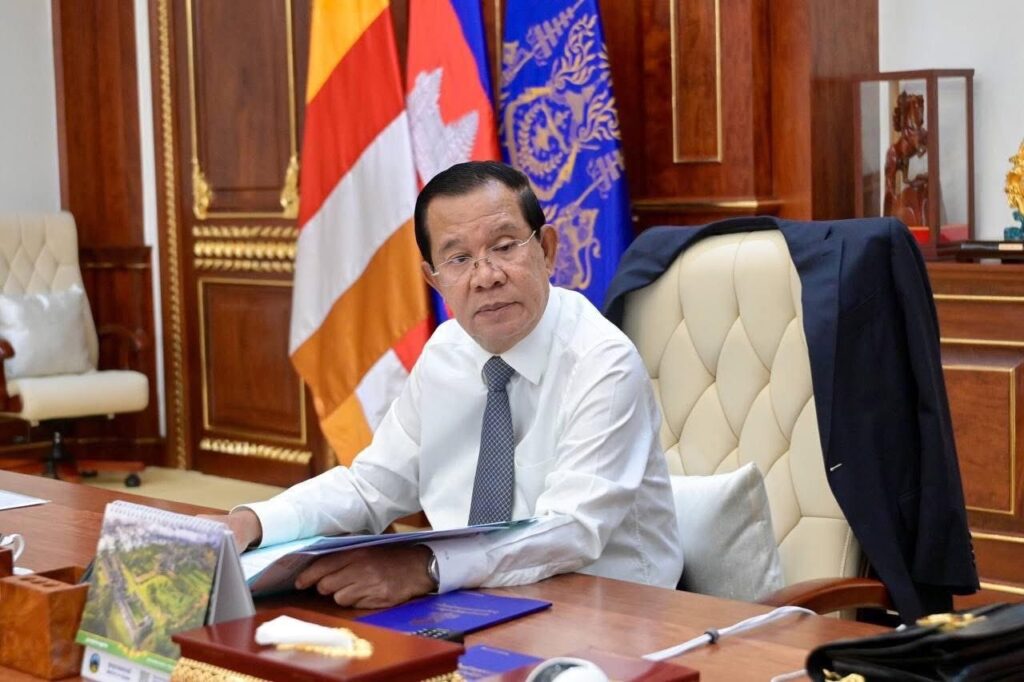
Phnom Penh: Samdech Techo Hun Sen, the acting head of state of the Kingdom of Cambodia, raised the question of whether Thailand is seeking to nationalize the maritime border area that overlaps with Cambodia?
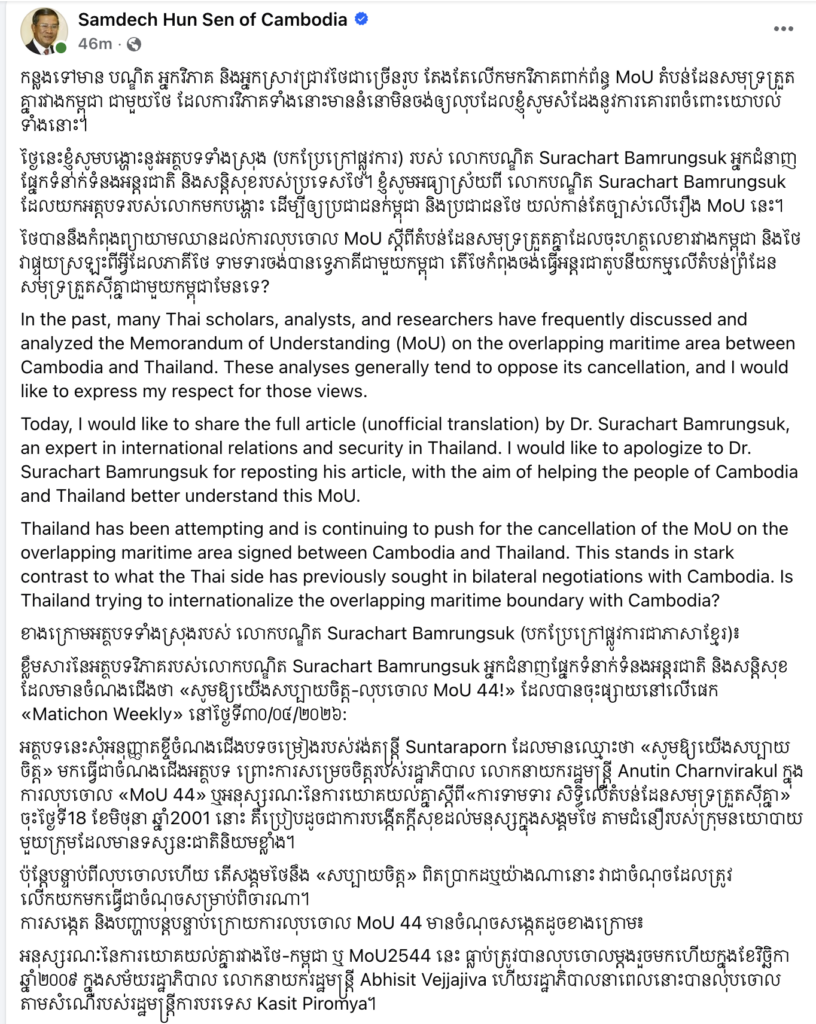
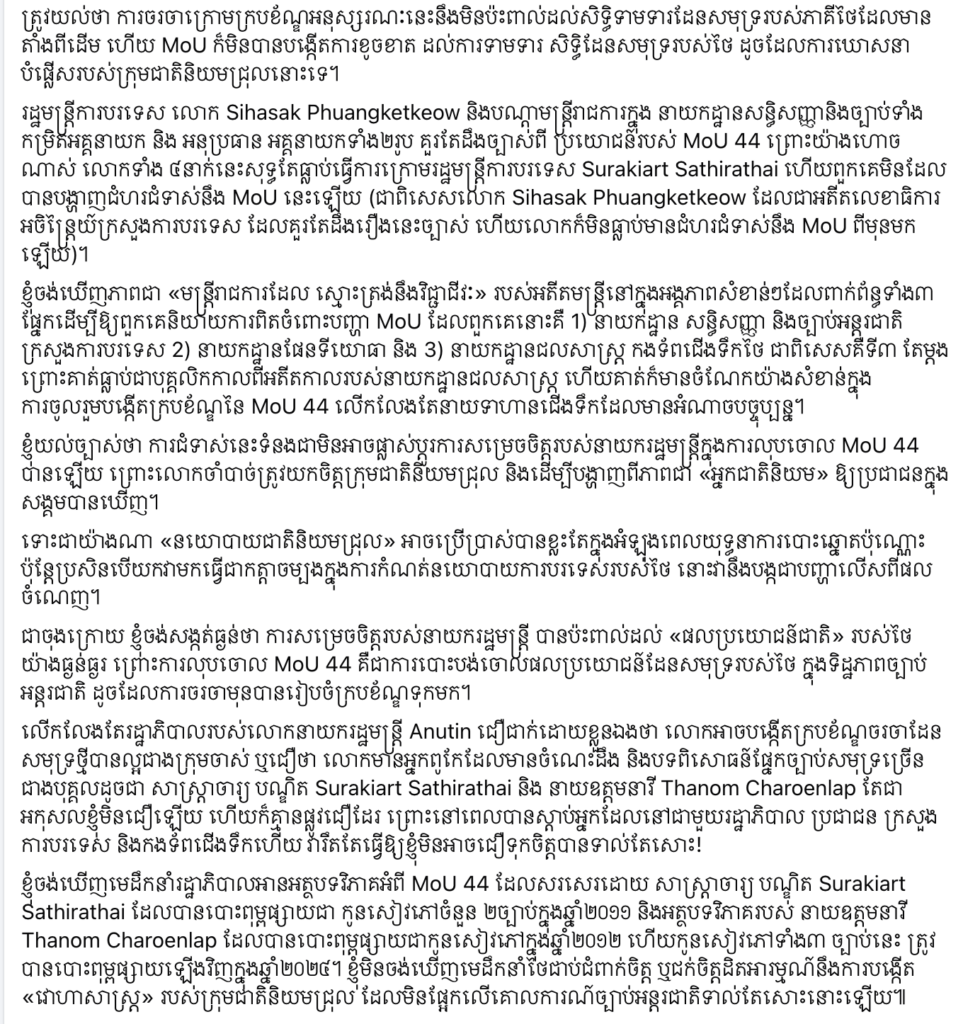
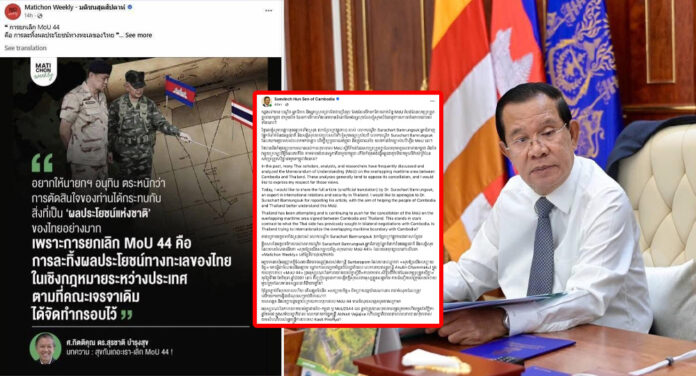
on the social network Facebook on the afternoon of May 1 In 2026, Samdech Techo Hun Sen posted two photos with the full text attached:
In the past, many Thai scholars, analysts, and researchers have often raised and analyzed the MoU on the overlapping maritime areas between Cambodia and Thailand, and I would like to express my respect for those opinions.
Today, I would like to post the full article (unofficial translation) by Dr. Surachart Bamrungsuk, an expert in international relations and security in Thailand. I would like to apologize to Dr. Surachart Bamrungsuk for posting his article so that the Cambodian and Thai people can better understand the MoU.
Thailand has been trying to cancel the MoU on the overlapping maritime area signed between Cambodia and Thailand. This is completely contrary to what the Thai side wants bilaterally with Cambodia. Is Thailand trying to nationalize the overlapping maritime area with Cambodia?
In the past, many Thai scholars, analysts, and researchers have frequently discussed and analyzed the Memorandum of Understanding (MoU) on the overlapping maritime area between Cambodia and Thailand. These analyzes generally tend to oppose its cancellation, and I would like to express my respect for those views.
Today, I would like to share the full article (unofficial translation) by Dr. Surachart Bamrungsuk, an expert in international relations and security in Thailand. I would like to apologize to Dr. Surachart Bamrungsuk for reposting his article, with the aim of helping the people of Cambodia and Thailand better understand this MoU.
Thailand has been attempting and is continuing to push for the cancellation of the MoU on the overlapping maritime area signed between Cambodia and Thailand. This stands in stark contrast to what the Thai side has previously sought in bilateral negotiations with Cambodia. Is Thailand trying to internationalize the overlapping maritime boundary with Cambodia?
Below is the full article by Dr. Surachart Bamrungsuk (unofficially translated into Khmer):
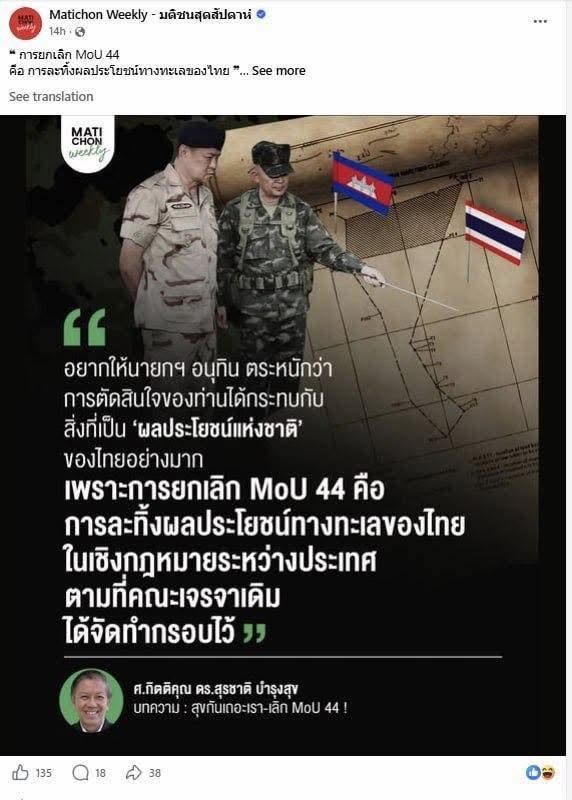
The content of the analytical article by Dr. Surachart Bamrungsuk, an expert in international relations and security, entitled “Let us be happy – cancel MoU 44!” Published on the page «Matichon Weekly» on 30/04/2026:
This article asks permission to borrow the title of the song by the Suntaraporn band called «Let Us Be Happy» as the title of the article because the decision of the government of Prime Minister Anutin Charnvirakul to cancel «MoU 44» or the Memorandum of Understanding on «Claims and Rights over Overlapping Maritime Areas» dated June 18, 2001 is like creating peace for people in Thai society according to the belief of a group of political groups with strong nationalist views.
But after the cancellation, whether Thai society will truly be «happy» is a point that needs to be raised as a point for consideration.
Observations and subsequent problems after the cancellation of MoU 44 have the following observations:
The Memorandum of Understanding between Thailand and Cambodia or MoU2544 was previously canceled once in November 2009 during the government of Prime Minister Abhisit Vejjajiva and the government at that time cancelled it at the request of Foreign Minister Kasit Piromya.
The cancellation announcement at that time was not effective in practice because it was not officially notified to the Cambodian government and did not bring the matter to the parliamentary process to cancel the treaty, so it was considered completely ineffective.
The cancellation of this memorandum of understanding must follow the method of cancellation of contracts as stipulated in the Vienna Convention of 1969, and not simply declare it terminated and cancelled immediately.
The cancellation announcement in 2009 was the result of the Cambodian government appointing Thaksin Shinawatra as its economic advisor, combined with Thai-Cambodian relations at that time being troubled by the Preah Vihear case, so the cancellation of the MoU was used as a sign of protest to the Cambodian government.
The Thai side’s cancellation announcement at the time was made by the Ministry of Foreign Affairs, which used the excuse that negotiations under the memorandum had not progressed, and the excuse of “no progress” was used again in 2026, no different from before, which raises the question of how true this is?
While the Yingluck Shinawatra government did not proceed with the cancellation process to make it official, the MoU remains in force as usual to this day. But now it is facing cancellation again.
The decision to cancel MoU 44 in the current situation can be interpreted as a result of the Thai-Cambodian war, which occurred twice in 2025, and is a demonstration of the close connection with the nationalist current of the Thai government leaders.
The Thai-Cambodian war issue directly contributed to the creation of the “Thai nationalist current” and was revived by a group of political groups with strong nationalist views who had been active in the Preah Vihear Temple issue in 2008, which made many people in Thai society today start to be interested in this current again. It is also a part of what contributed to the victory of the Bhumjaithai Party, which is able to make the government leaders still adhere to this current and hope to be able to continue to receive support from this current. It is unclear whether there are other factors behind the cancellation of the MoU, other than portraying himself as a “nationalist prime minister” to please nationalist and extremist groups, because I do not see any other interference issues, unlike the issue that occurred in 2009 when the Thai government was not satisfied with the appointment of an advisor to the Cambodian government.
The cancellation of the MoU, citing the reason to open up opportunities for Thailand and Cambodia to use the Law of the Sea (UNCLOS, 1982), seems “ridiculous” because MoU 44 is already based on the Law of the Sea, and the original organizing committee is not someone who has no knowledge of the Law of the Sea and does anything that violates the principles of the Law of the Sea.
The cancellation will force everyone to return to creating a new negotiating framework in the form of a “Provisional Arrangement” which is no different from the same Memorandum of Understanding. But how will it be achieved?
It should be understood that MoU 44 is a negotiation mechanism, not an international treaty to share the benefits of oil and natural gas in the Gulf of Thailand. Abrogation is the removal of the mechanism or framework for negotiations and the abolition of the negotiating committee.
It should be understood that negotiations under this memorandum will not affect the Thai side’s pre-existing maritime claims, and the MoU has not created any damage to Thailand’s maritime claims, as the ultra-nationalist groups have been promoting.
Foreign Minister Sihasak Phuangketkeow and civil servants in the Department of Treaties and Laws at the level of Director-General and Deputy Director-General should be well aware of the benefits of MoU 44, because at least he and These four all worked under Foreign Minister Surakiart Sathirathai and they never opposed the MoU (especially Sihasak Phuangketkeow, the former Permanent Secretary of the Ministry of Foreign Affairs, who should have known this clearly and who has never opposed the MoU before).
I would like to see the “honest civil servants” of the former officials in the three main departments involved so that they can tell the truth about the MoU issue, which are 1) the Department of Treaties and International Law, Ministry of Foreign Affairs, 2) the Department of Military Mapping, and 3) the Department of Hydrology, Royal Thai Navy, especially the third one because he was a former employee of the Department of Hydrology and he also played a significant role in
creating the framework of MoU 44, except for the current naval officers in power.
I understand that this objection is unlikely to change the Prime Minister’s decision to cancel MoU 44 because he needs to appease the ultra-nationalist groups and to show his “nationalism” to the public.
However, “ultra-nationalist politics” can be used to some extent only during election campaigns, but if it is used as the main factor in determining Thailand’s foreign policy, it will cause more problems than benefits.
Finally, I would like to emphasize that the Prime Minister’s decision has seriously affected Thailand’s “national interests” because canceling MoU 44 is an abandonment of Thailand’s maritime interests in terms of international law, as the previous negotiations had prepared the framework for.
Except for Prime Minister Anutin’s government Believe yourself that you can create a new maritime negotiation framework better than the old group or believe that you have more experts with more knowledge and experience in maritime law than people like Professor Dr. Surakiart Sathirathai and Rear Admiral Thanom Charoenlap. Unfortunately, I do not believe it and there is no way to believe it because when I listen to those who are with the government, the people, the Ministry of Foreign Affairs and the Navy, it makes me even more untrustworthy!
I would like to see government leaders read the analysis of MoU 44 written by Professor Dr. Surakiart Sathirathai, which was published in two booklets in 2011, and the analysis of Rear Admiral Thanom Charoenlap, which was published in a booklet in 2012, and these three booklets were republished in 2024. I don’t want to see Thai leaders get caught up in or obsessed with creating a “rhetoric” of ultranationalist groups that is not based on international law principles at all.