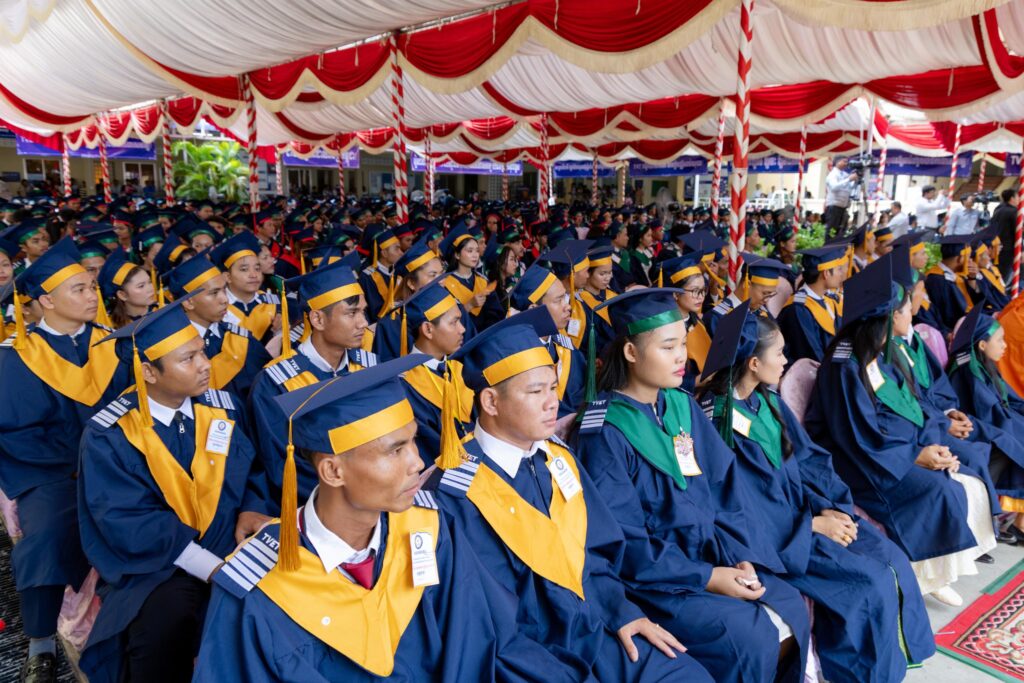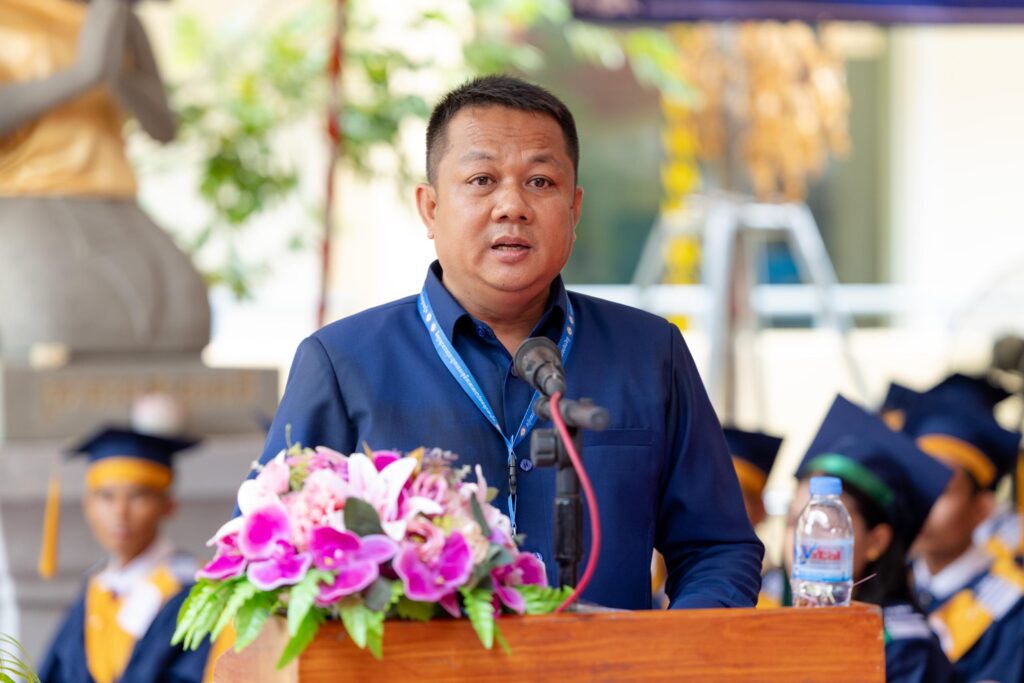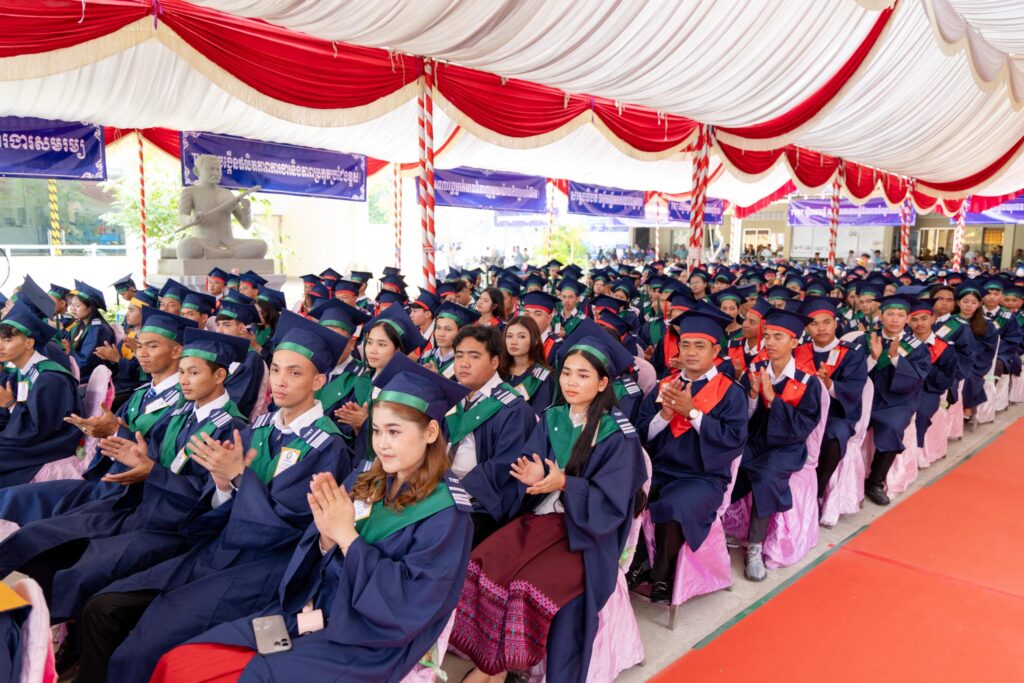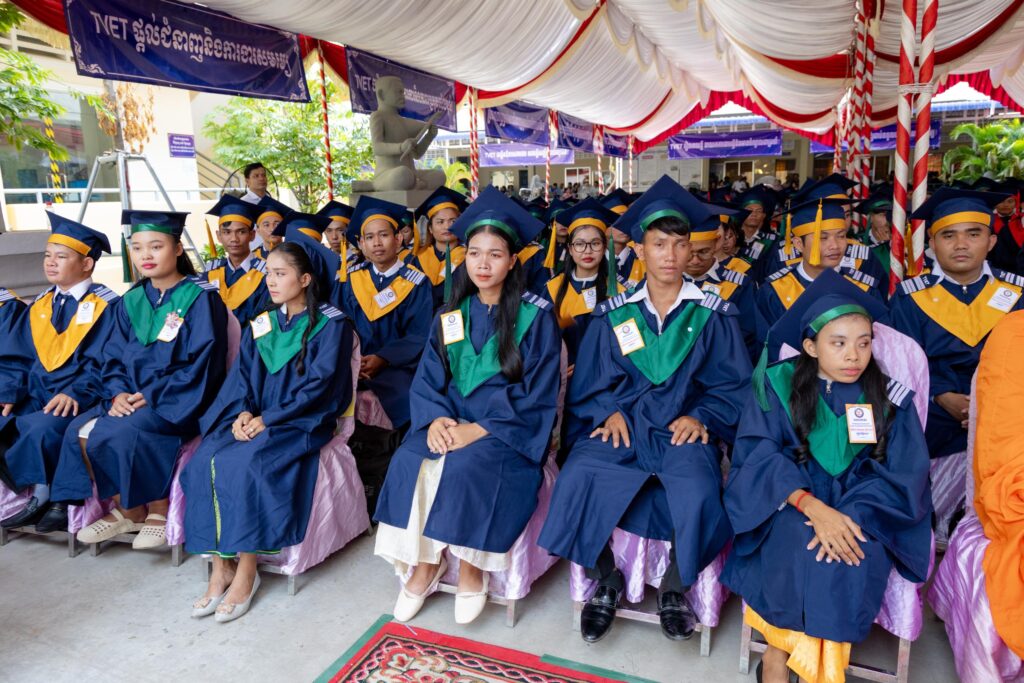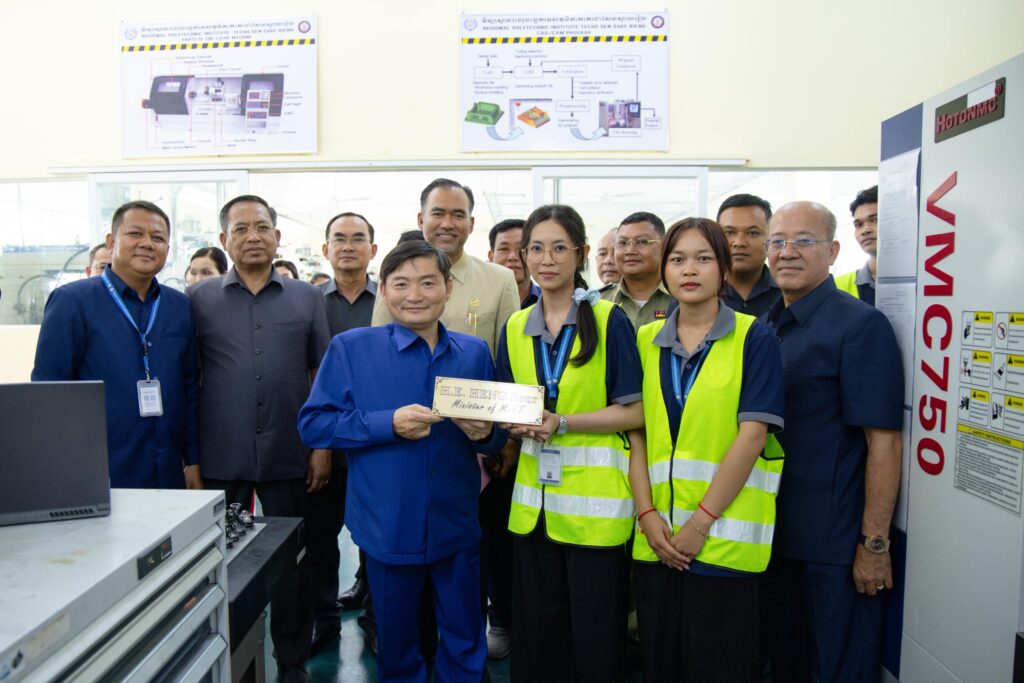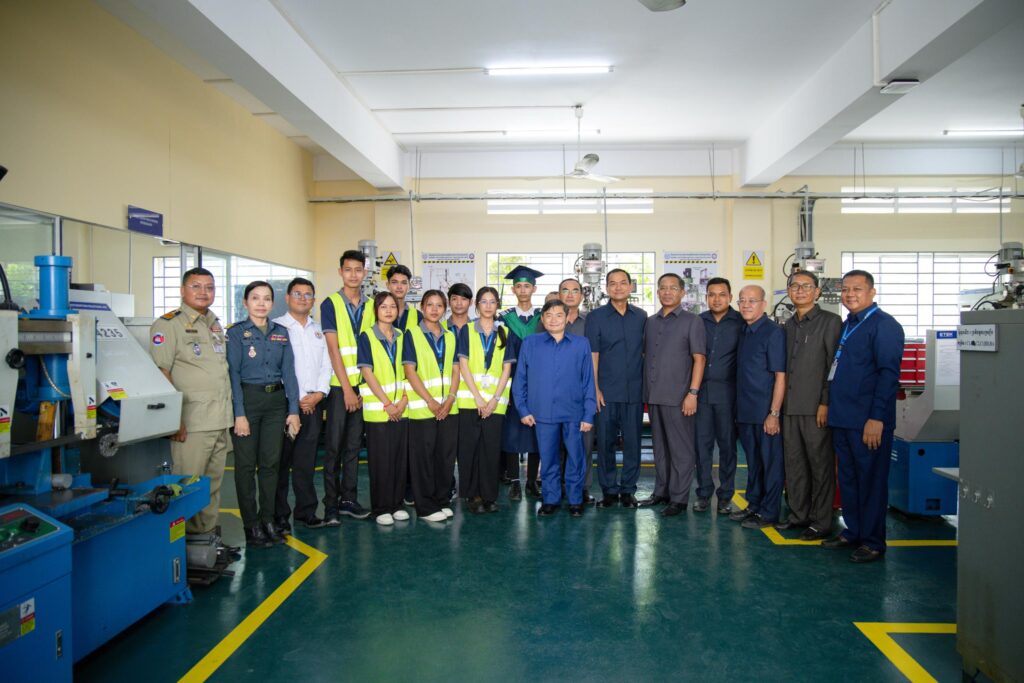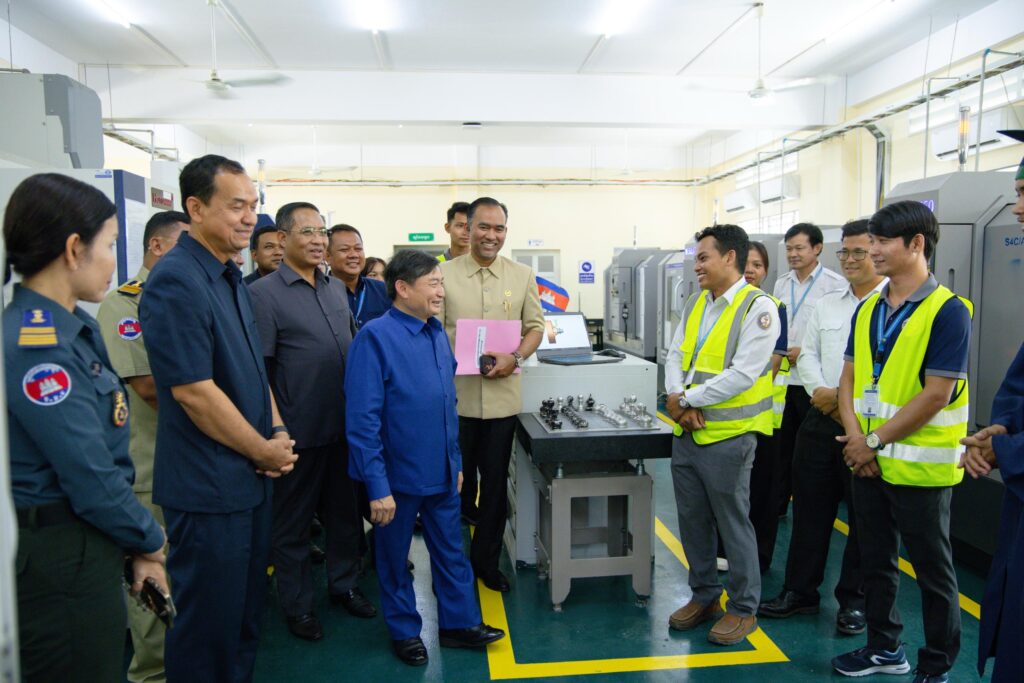

Svay Rieng: Mr. Heng Sour, Minister of Labor and Vocational Training, presided over the graduation ceremony for 2023-2025 winners, 758 (293 female) out of a total of 2,725 students, at the Svay Rieng Regional Polytechnic Institute on the morning of May 16, 2026, including technical and vocational diplomas, level 1, 2, 3, higher technical diplomas, and technical bachelor’s degrees.
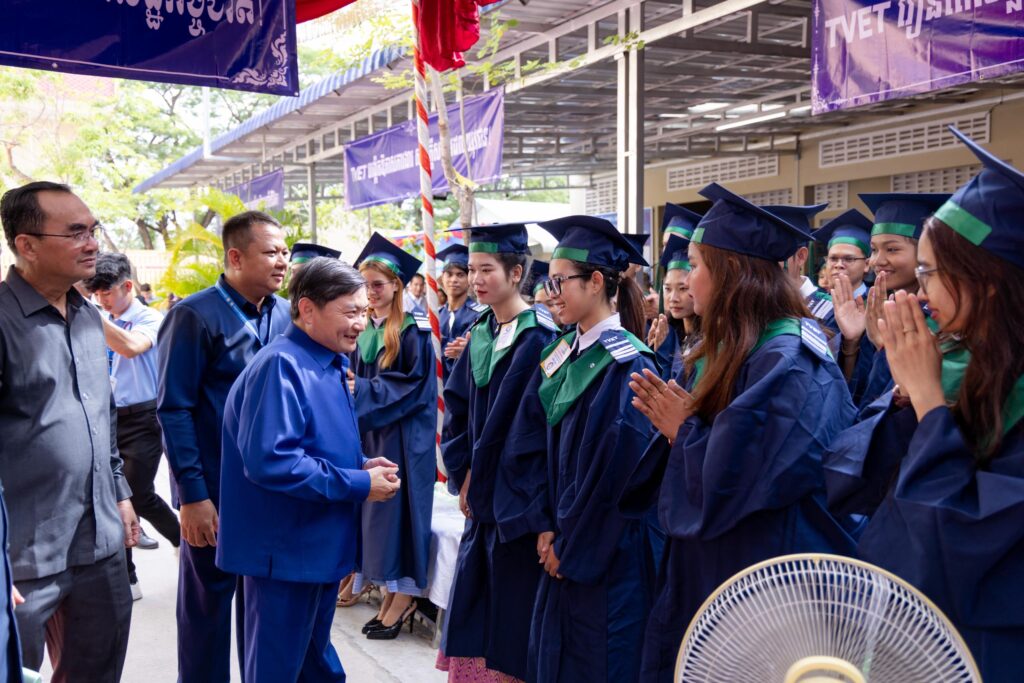
In the program attended by nearly 1,500 people, the Minister congratulated the winning students and highly appreciated the proud achievements of the institute, which has carried out its work with high responsibility. This success stems from the right decision to embrace Technical and Vocational Education and Training (TVET) as a “bridge” for building the future of oneself, family and society. He highlighted that children, parents, and guardians are living witnesses and influential advocates at the grassroots level, clearly demonstrating that TVET education, especially the 1.5 million program, is a smart choice because the short-term study and quick pay can support families and help meet the need for skilled labor in Cambodia, as well as help attract investment.

At the same time, he also highlighted the many benefits of the 1.5 million program, which is a priority in building the human capital of the Royal Government in the 7th term under the wise leadership of Samdech Maha Bovorathi Hun Manet, Prime Minister of Cambodia, in paying high attention to ensuring a decent living for citizens and achieving the goal of “Every citizen has at least one skill for life” and the approach of “Learn to finish, know how to get a job”.
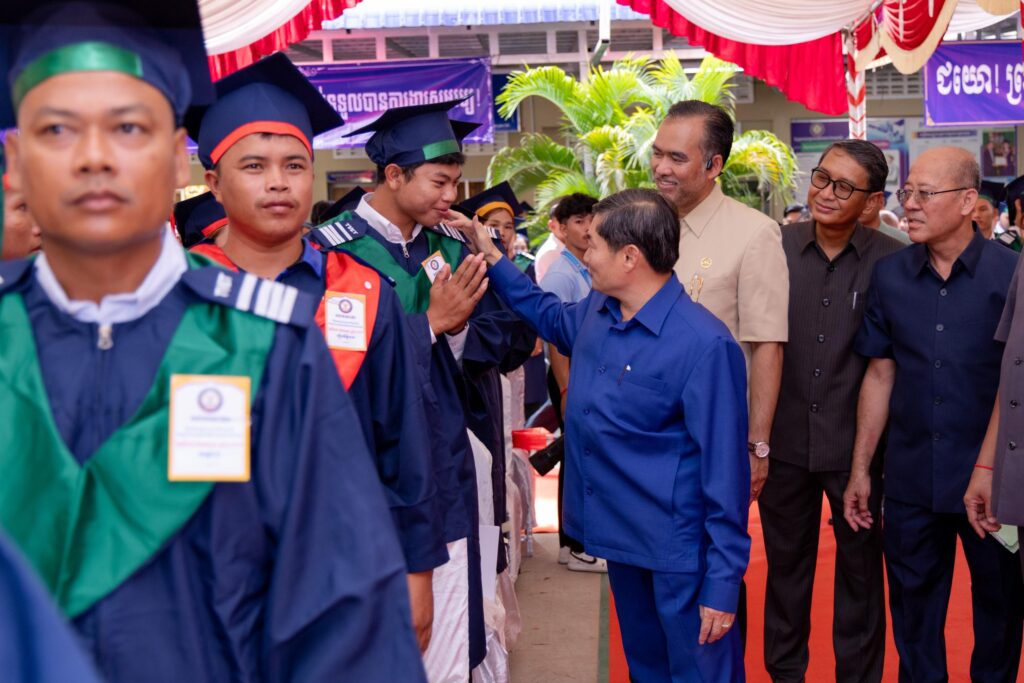
The Minister said that even after graduation, the students still have the opportunity to strengthen their abilities, change their skills, and further improve their skills at this institute or other TVET schools to meet the needs of the growing skilled labor force both locally, regionally, and globally, which contributes to the growth of the national economy, especially helping to achieve the vision of a high-income country by 2050. In addition, receiving this diploma is only a graduation from school, but the students continue to learn more in the world of work and society, which he considers “learning without a teacher, without a clear formula.” With his colleagues, Mr. Heng Sour urged young people to learn about communication, teamwork, and coordination, especially to be good at observing and learning from their leaders’ good points to be successful in their work.
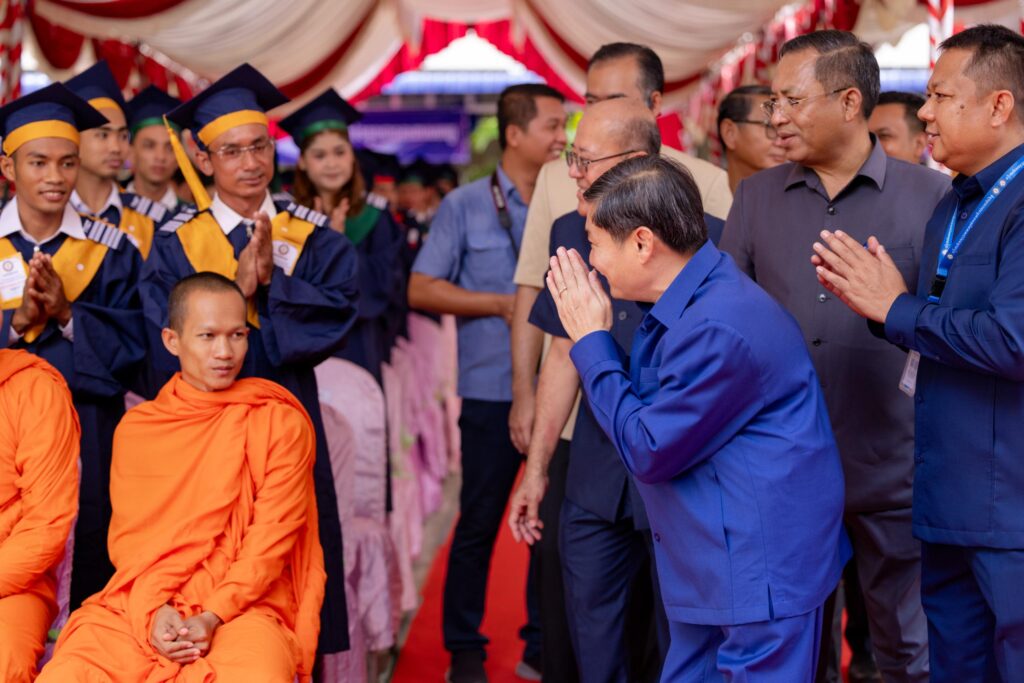
In the digital age, where smart phones are becoming “information warehouses,” The Minister reminded young people not to spend too much time on social media, but to use it to study, research and learn from various programs on their own, especially artificial intelligence (AI) to increase technical knowledge that will help them perform their jobs. Mr. Heng Sour also asked the institute to strive to expand partnerships with enterprises, institutions, companies, farms, garages and all relevant partners. With the economic potential of Svay Rieng Province, which has become a rising star province in the east, the Minister said that the Ministry of Labor will strive to mobilize financial resources to establish a TVET institute in Romeas Hek district in the future, which will provide new opportunities and choices for local people as well as help develop human resources.

On this occasion, Mr. Men Eng, Deputy Governor of Svay Rieng Provincial Government, said that the knowledge and skills of these young technicians are very important in responding to market needs in Svay Rieng Province, which has become an important economic pole with the largest number of special economic zones in Cambodia with more than 160,000 workers. Mr. Muth Chenda, Director of the Svay Rieng Polytechnic Institute, Techo Sen Region, presented a progress report of the institute, which is playing an important role in coordinating, managing and providing TVET services according to labor market needs. The institute is committed to increasing student enrollment at all levels of study, enhancing the quality and effectiveness of training in line with labor market needs and technological advancements.