Phnom Penh: Prime Minister Hun Sen of Cambodia has highlighted that Cambodia’s use of forced mediation to resolve overlapping maritime claims with Thailand is the second case in the history of UNCLOS, after the first case between East Timor and Australia.
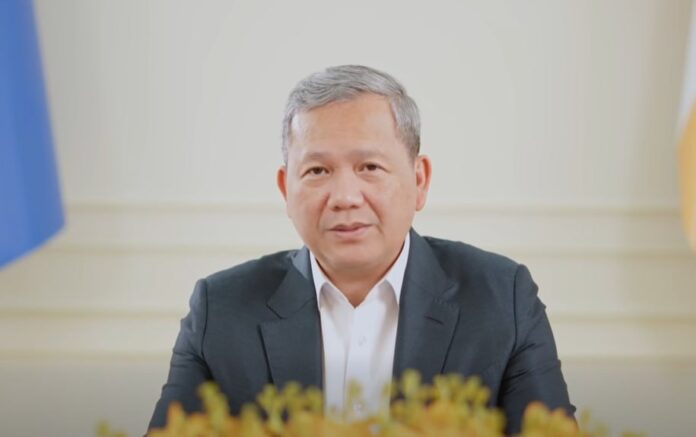
In a statement to the Cambodian people on the Royal Government’s resolution regarding overlapping maritime claims with Thailand on June 2, 2026, Prime Minister Hun Sen stated that the United Nations Convention on the Law of the Sea, commonly known as UNCLOS, is an international treaty that defines the rights and responsibilities of States Parties in relation to maritime areas, of which both Cambodia and Thailand are parties to this convention.
Prime Minister Argued that forced conciliation is a peaceful legal mechanism under the UNCLOS Convention. The mechanism will allow both countries to present their positions before an independent panel of five mediators, all of whom are leading experts in international law.
At the same time, the Prime Minister highlighted that the first successful use of the forced mediation mechanism was in the case of a dispute between East Timor and Australia. Through the process of this mechanism, the two countries peacefully resolved their maritime boundary in 2018.
In which, Prime Minister Hun Manet said, “Through the use of the forced mediation mechanism, this is the second case in the history of UNCLOS. Cambodia strongly hopes that this process will once again demonstrate the true value of international law and the peaceful resolution of disputes.”
Furthermore, the King reiterated that the use of this forced mediation mechanism does not increase tensions, but rather an effort to resolve the dispute through negotiations between the two countries under the coordination of international mediators. This is also not a unilateral action, but an effort to resolve the dispute peacefully through international law and in good faith.