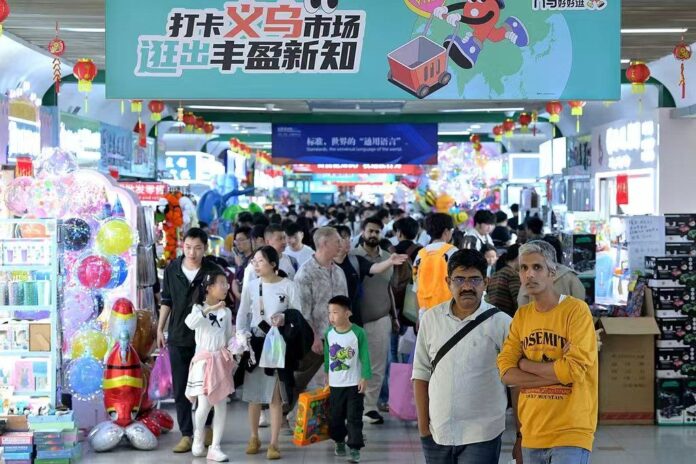
Yiwu, located in the center of Zhejiang Province, China, is a place without the advantages of abundant natural resources or superior geographical location. It is not a port city, is not near the provincial capital, is not adjacent to the border, and the average cultivated area per capita is less than 0.03 hectares. It has never been considered a prosperous place in Zhejiang Province. However, nowadays, when it comes to Yiwu, not only Chinese people but also businessmen from many countries are familiar with this small city and applaud its development.
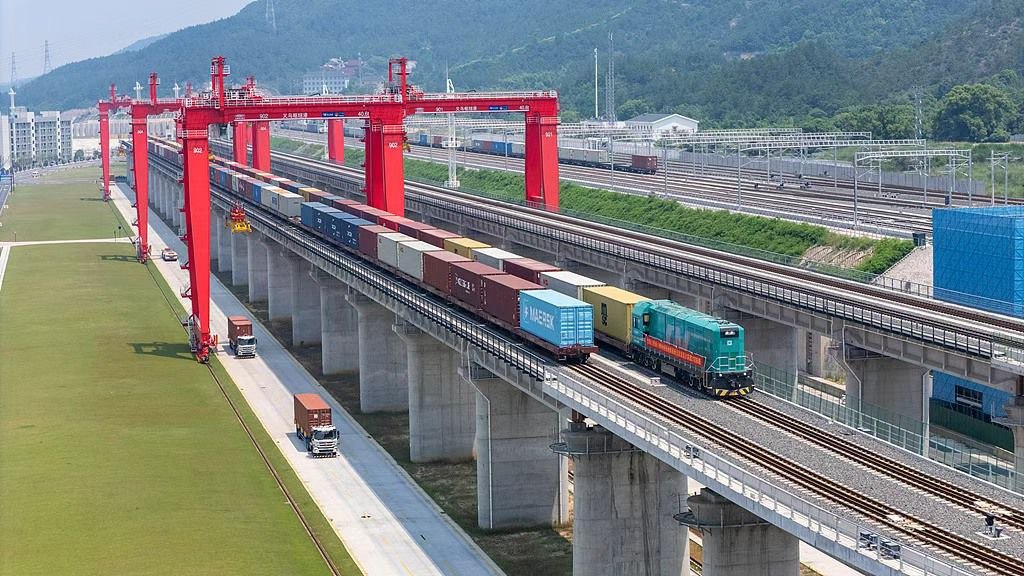
In 2025, the total import and export volume of Yiwu was 836.5 billion yuan, and in the first quarter of 2026, the total import and export volume of Yiwu was 209.3 billion yuan, an increase of 25% compared with the same period in 2025, setting a new record in history. What is the reason why a city with no special characteristics and no economist previously thought it could develop well has become such a commercial center of Zhejiang Province?
First, let’s explore the time when Yiwu’s “small commodities market” emerged. The first appearance of Yiwu’s “small commodities market” originated from bartering, among which “sugar for chicken feathers” was the most popular exchange method in the 1970s and 1980s, that is, sugar merchants exchanged red sugar for chicken feathers from villagers to use as fertilizer for their fields. The rest of the sales were mobile on the streets. In 1982, the Yiwu County Party Committee made a rare decision to open a “small market” and build a shop for small traders to sell all kinds of small goods. It is worth noting that at that time, the term “market economy” was unfamiliar to ordinary people, so allowing a “small market” required policymakers to be highly responsible and courageous in their decisions.
With the rapid development of the market, the development of Yiwu’s “small market” was slowed down due to some problems. In 2006, when Xi Jinping, then Party Secretary of Zhejiang Province, visited Yiwu to inspect and understand the work of the city, he noticed that there were problems hindering the development of Yiwu, namely the lack of support from the new policy. He gave an example that the development of Yiwu’s “small product market” is like “changing new clothes that are big enough for children, because children grow up very quickly. If they keep wearing the same old clothes, they will be too tight and hinder the growth of children. As for the market that is developing rapidly, if the policy is not followed, it will also hinder the development and progress.”
Xi Jinping’s recommendation points out the direction for the creation of the “Yiwu Development Experience”, which is the foundation for the development of Yiwu in the new era. The Zhejiang Provincial Government has delegated unprecedented powers to Yiwu to develop autonomously. The administration provides policy support, while entrepreneurs strive to innovate new products, that is, “if there is none, create it” and transform the useless into marketable products.
Yiwu dares to experiment. The “check and pack” formula of Yiwu Customs has improved the efficiency of exporting multiple types of goods mixed in one carton, that is, goods that meet the standards are allowed to be placed in export containers, which has reduced the number of goods returned by foreign customs. This formula has also been applied in more than 30 markets in China, making the export of small goods easier and faster.
The “Yiwu Development Experience” is a continuous reform, in line with the rapid development of e-commerce, especially cross-border e-commerce. Online sales of goods have changed the traditional sales model. Yiwu’s “traditional brand” of cultural and educational products has become a popular commodity in foreign markets, not only showing the image and charm of “Made in China”, but also highlighting Chinese culture.
Twenty years after the “Yiwu Development Experience” was launched, the trade volume of Yiwu’s “small product market” has increased from 31.5 billion yuan to more than 322.3 billion yuan in 2025, and the import and export volume ranks first among the administrative regions at the county/municipal/district level in China. It is worth noting that the policies of the Yiwu municipal government are not only favorable to the local people, but also an opportunity for foreigners. Many foreigners have seized the opportunity to invest and do business there, and some have even lived there for ten to twenty years.
Developing from a street market to the world’s largest small-scale product trading center, Yiwu currently has more than 1.26 million business families, sells more than 2.1 million products, and has trade relations with more than 230 countries and regions around the world, providing employment opportunities for more than 32 million people nationwide.
The key to the success of the “Yiwu Small-Scale Market” is that the administration and enterprises/businessmen work together, that is, trade supported by sound policies that are suitable for local conditions will allow the private economy to develop in an environment of freedom, standards, and marketization. The “Yiwu Development Experience” is not a fixed formula, but a reform based on actual conditions to keep pace with the needs of the times and achieve the goal of prosperity for all.
Article by: Mr. Taing Sileng, staff member of Cambodia-China Friendship Radio