
China’s economic data for the first five months of this year was officially announced on June 16: Major economic indicators such as industry and international trade increased significantly, and the national economy maintained a generally stable trend and moved towards innovation and high quality, etc. Foreign media have found that these resilient indicators have once again demonstrated the strong internal driving force of the Chinese economy and have also added new driving force to the weakly recovering global economy. If you look at the “scoreboard” in detail, you can see that “stability”, “innovation” and “resilience” are the highlights.
Let’s look at the “stability” of the overall trend of the Chinese economy. In the first 5 months of this year, the added value of medium and large industrial enterprises increased by 5.4 percent compared to the same period last year. Looking at consumption, it can be seen that in the first 5 months of this year, the retail sales of social consumer goods and service consumption increased by 2.8 percent compared to the same period last year, of which the retail sales of service consumption increased by 5.4 percent compared to the same period last year, which is higher than the growth rate of retail sales of social consumer goods. This shows that service consumption has become an important driving force for China’s consumption growth day by day.
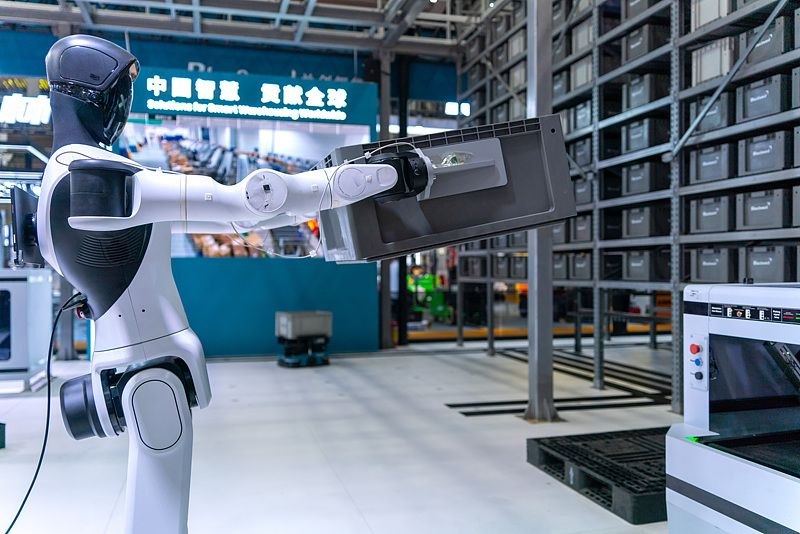
As the world’s second largest economic entity, the “stability” of China’s economy has provided the world with rare stability and certainty for long-term development. The “Global CEO Survey Report on China” released by PricewaterhouseCoopers in the first half of this year showed that the proportion of CEOs who consider mainland China to be the “new” driving force of development has increased. New quality manufacturing forces are accelerating the development of new fields to drive growth. From Chinese robots that have become extremely popular on social media overseas to Zhang Xue’s motorbikes that have helped motorcyclists win the world’s top motorcycle racing championships, these highlights show the rapid development of China’s new quality manufacturing forces.
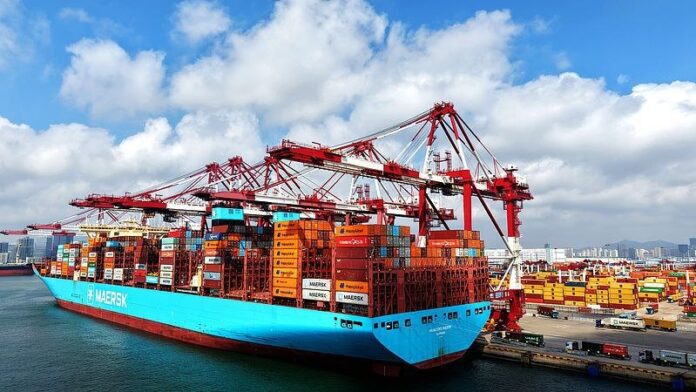
Not only that, in the face of increasing external uncertainties, the resilience of China’s economy has also attracted the attention of the outside world. Take international trade as an example: although global economic and trade growth has encountered difficulties and trade protectionism has resurfaced, China’s merchandise exports and imports in May increased by 16.9 percent year-on-year, with both exports and imports maintaining double-digit growth. These remarkable data not only reflect the resilience and vitality of the Chinese economy, but also actively contribute to the development of world economy and trade and the stability of the global industrial and supply chains, which clearly signals that China has been adhering to the path of opening up and development, and sharing dividends with the world.
Currently, the external uncertainties and instability we have been facing are numerous, but the long-term positive trend of the Chinese economy has not changed. As China pushes forward the implementation of the 15th Five-Year National Development Plan, the domestic demand and the potential for opening up inherent in the Chinese economy will be further unleashed. It is therefore not difficult to understand why international rating agencies such as Moody’s and Fitch have recognized China’s economic achievements and why international capital is increasingly investing in China. Because the world has increasingly seen that traveling with China is like traveling with opportunities, and investing in China is an investment in the future.