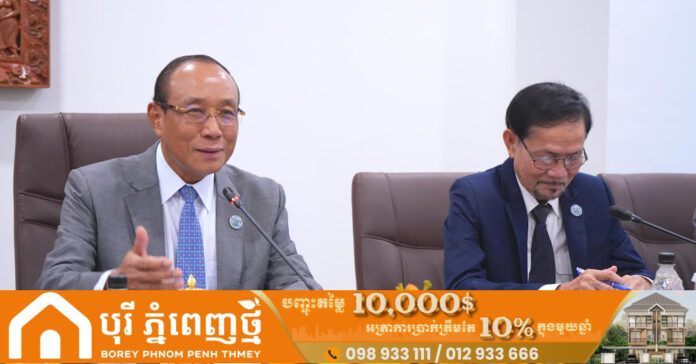
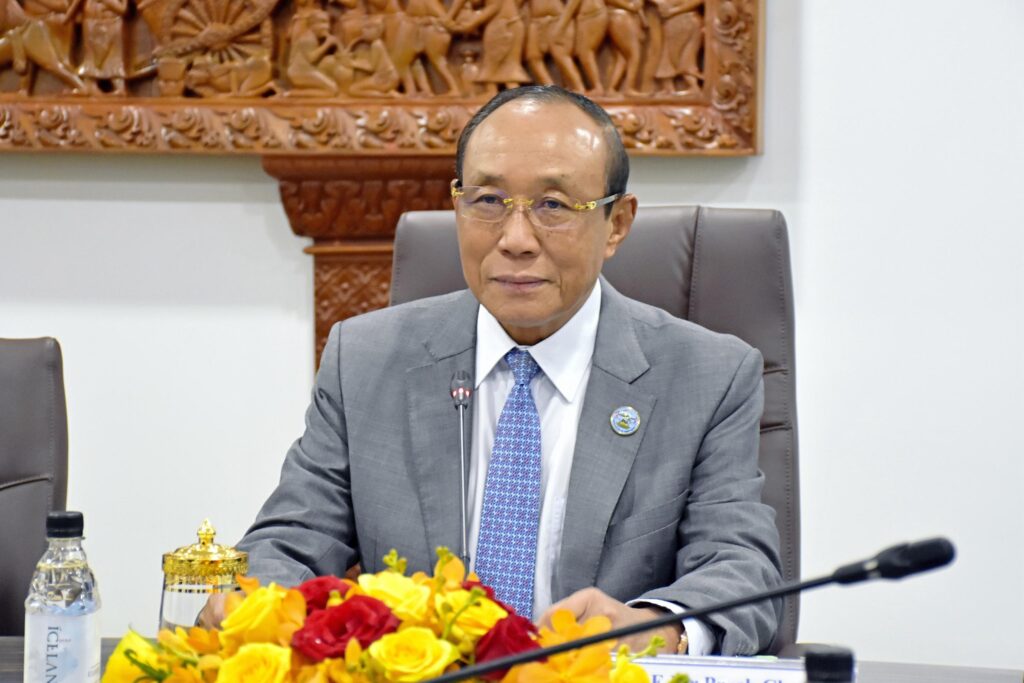
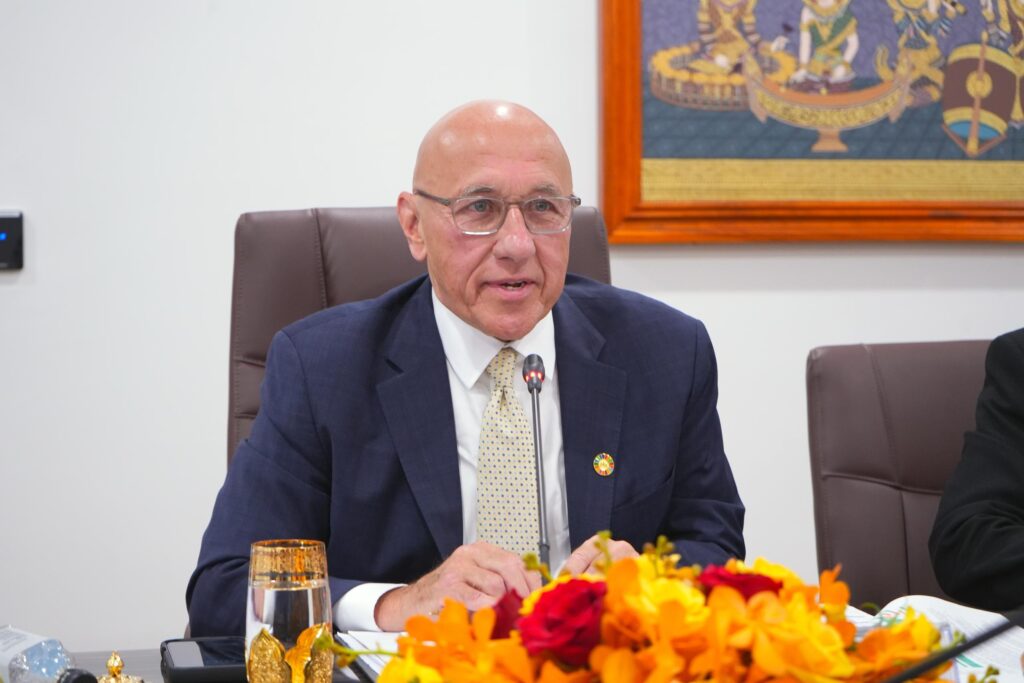
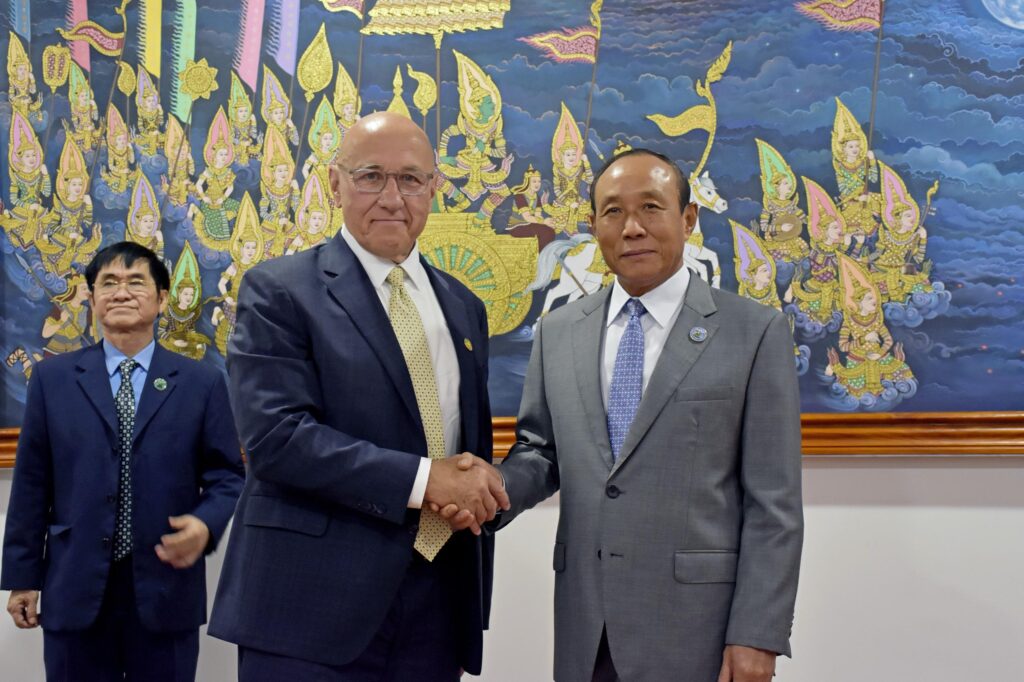
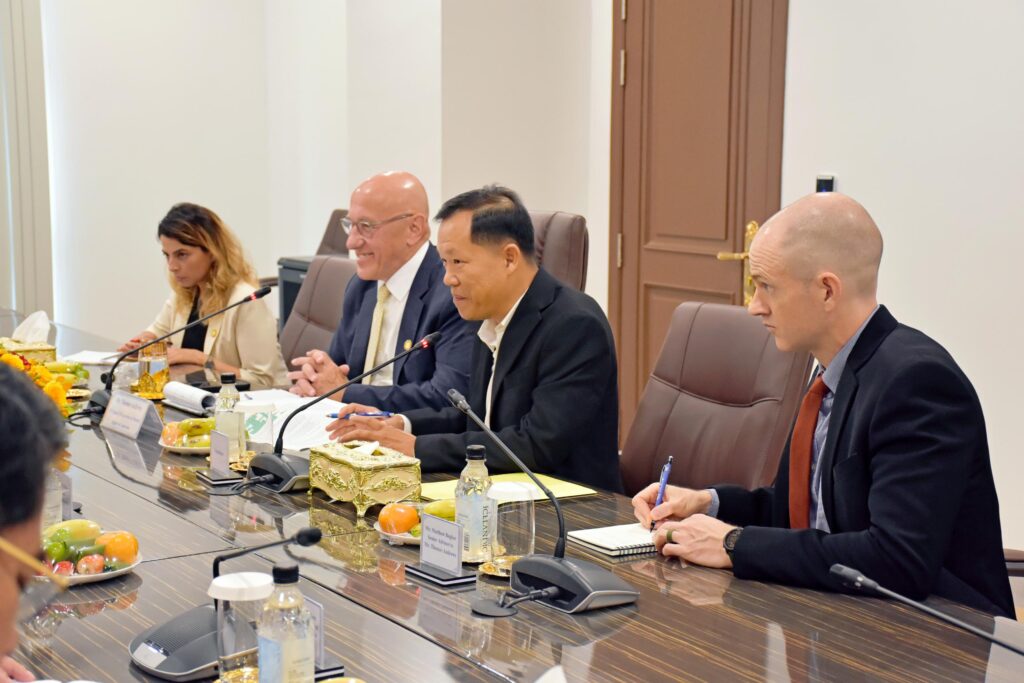
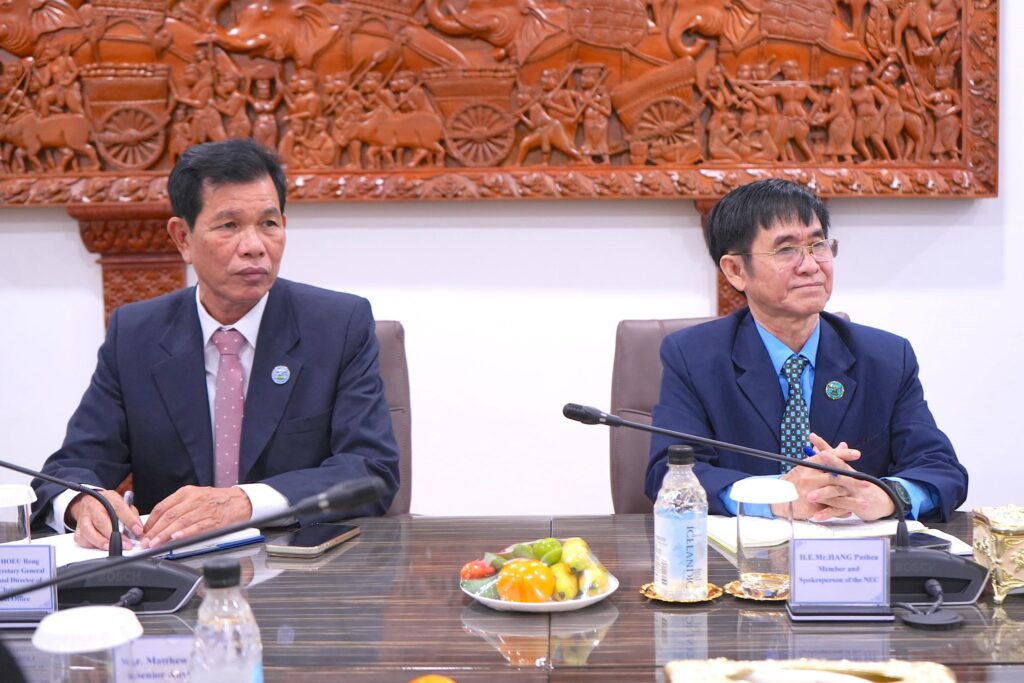
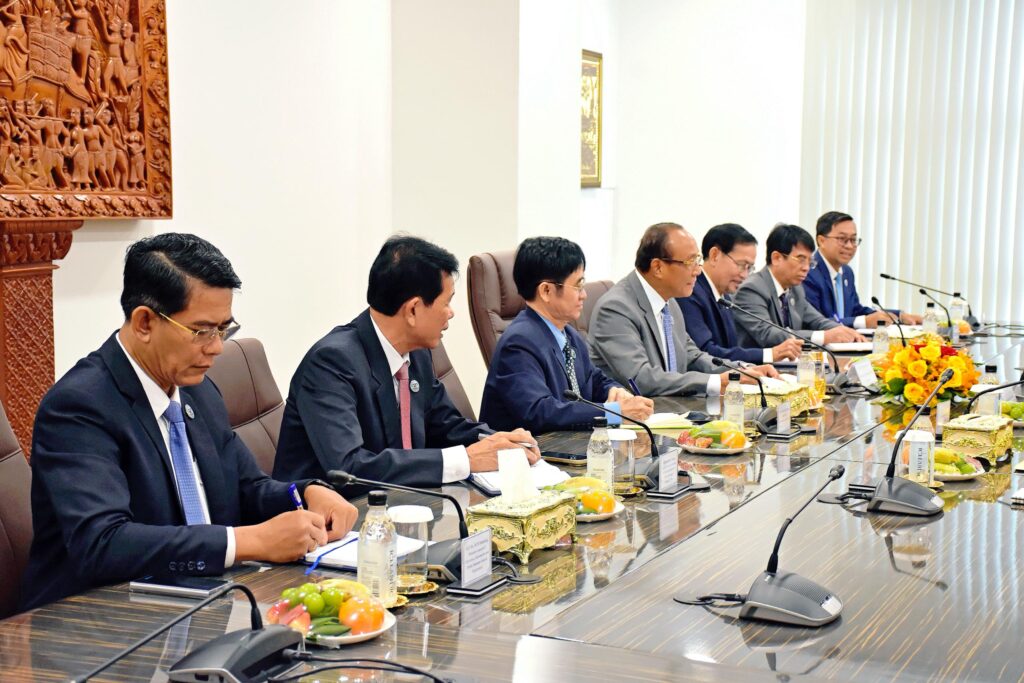
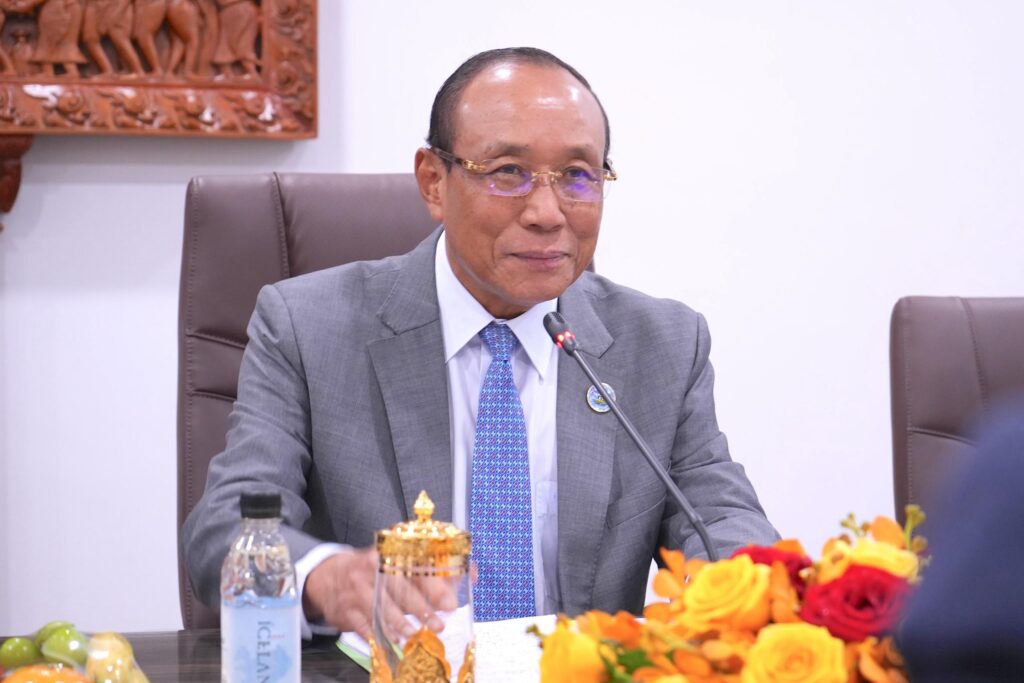
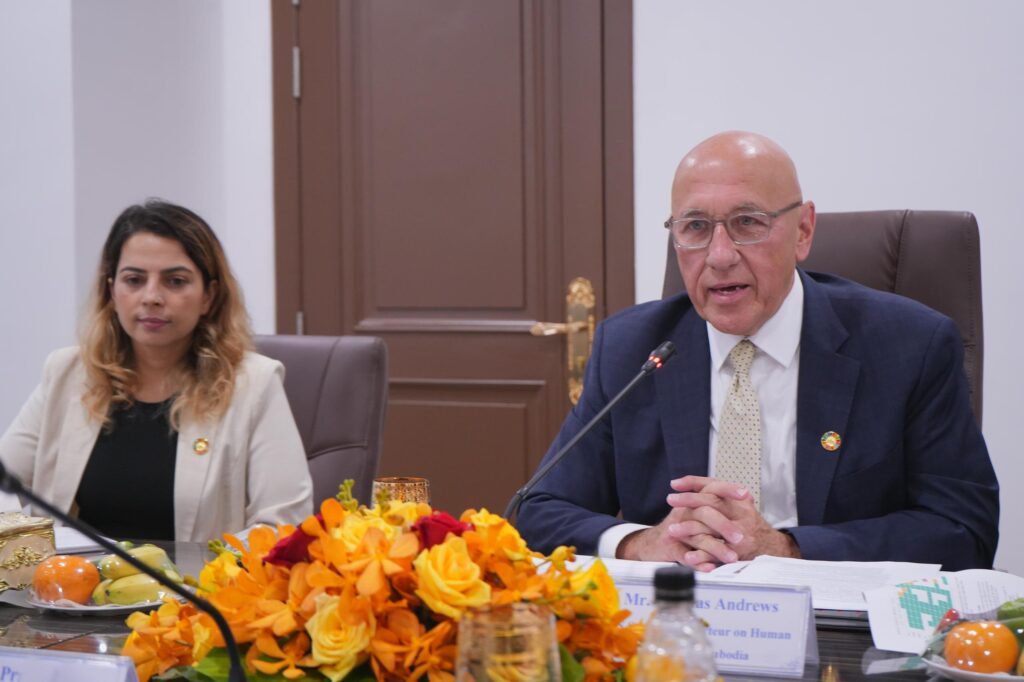
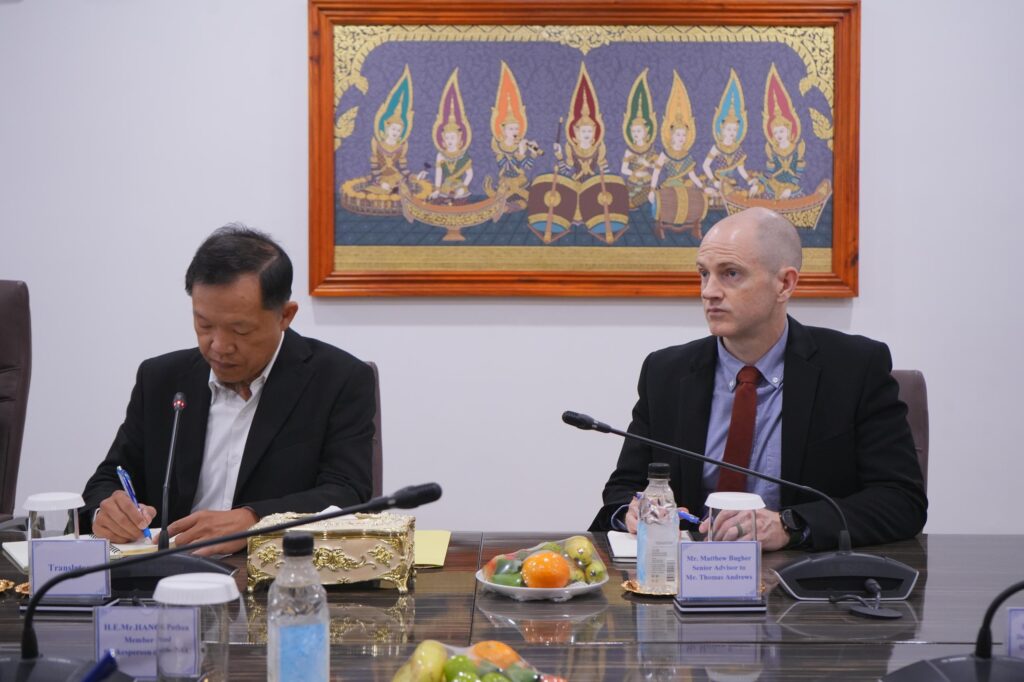
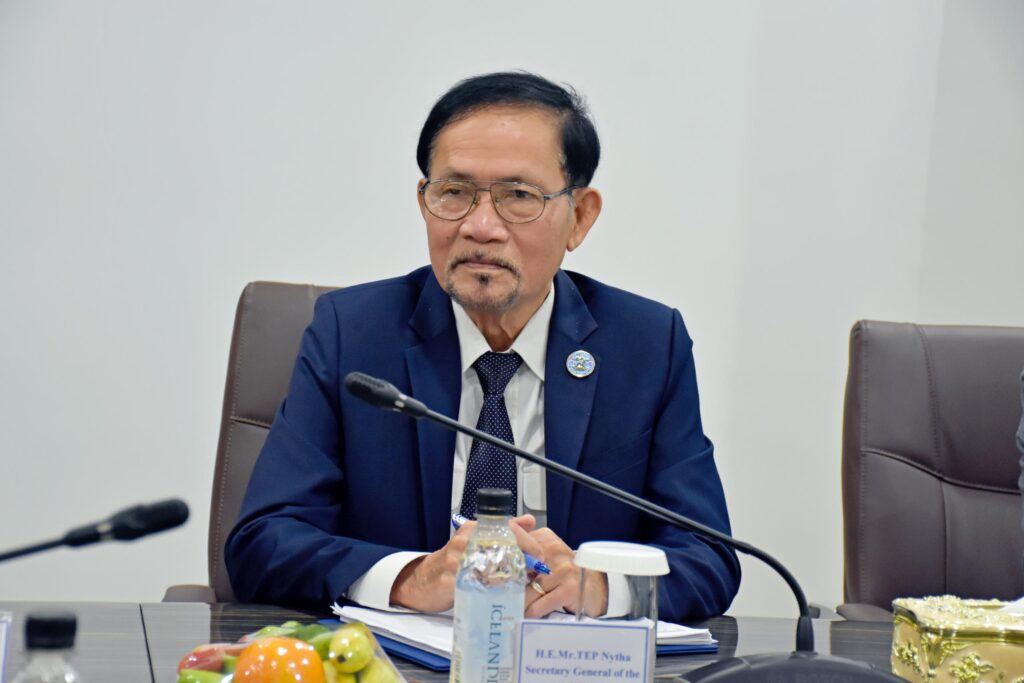
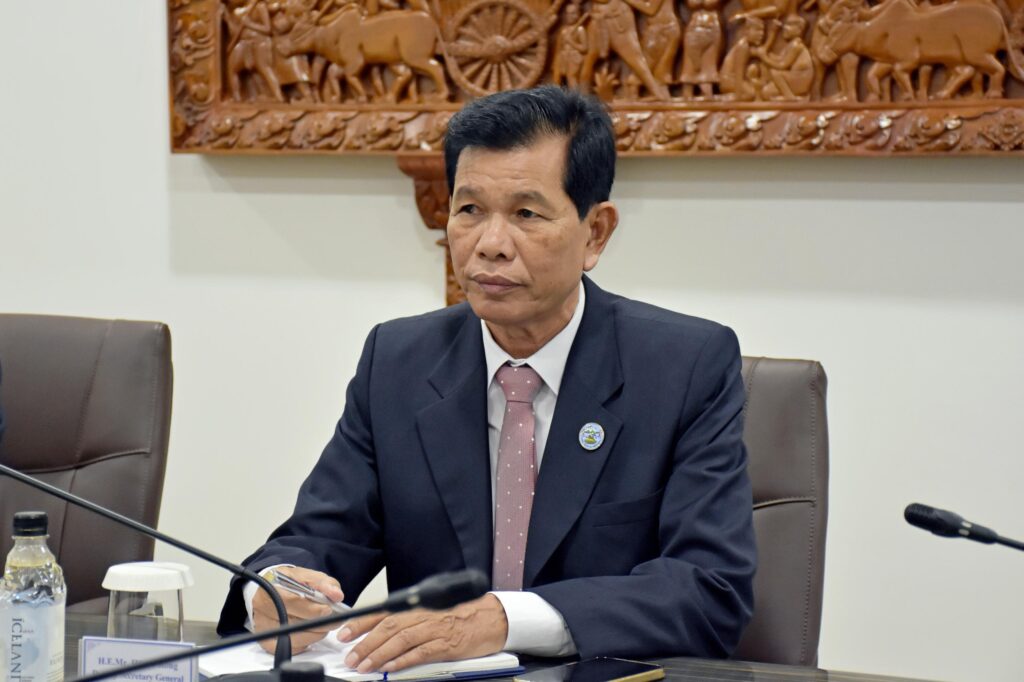
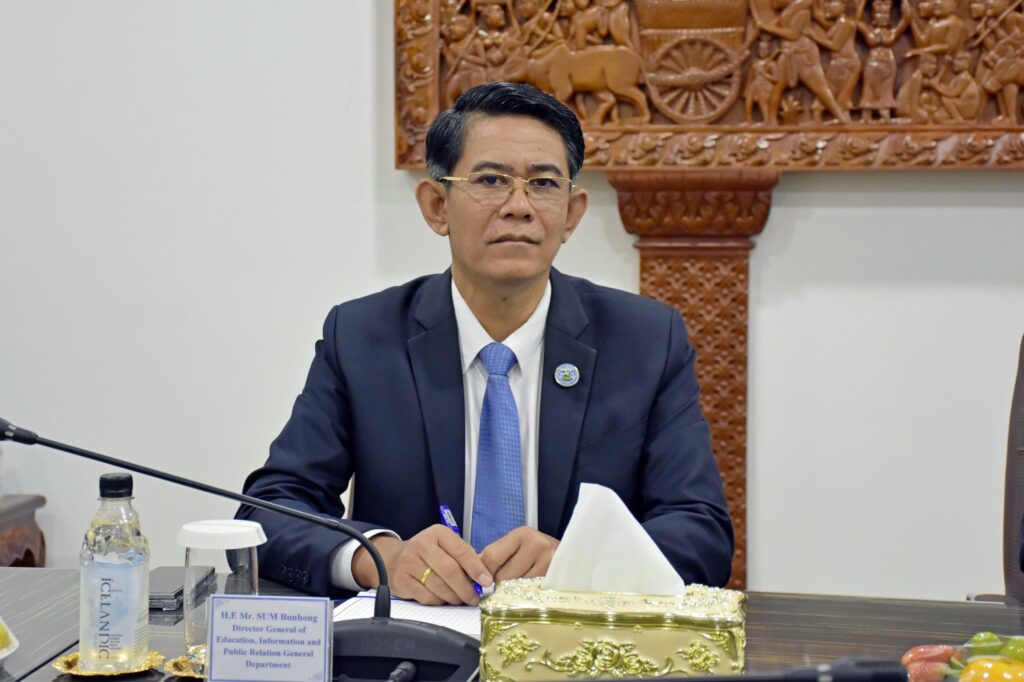
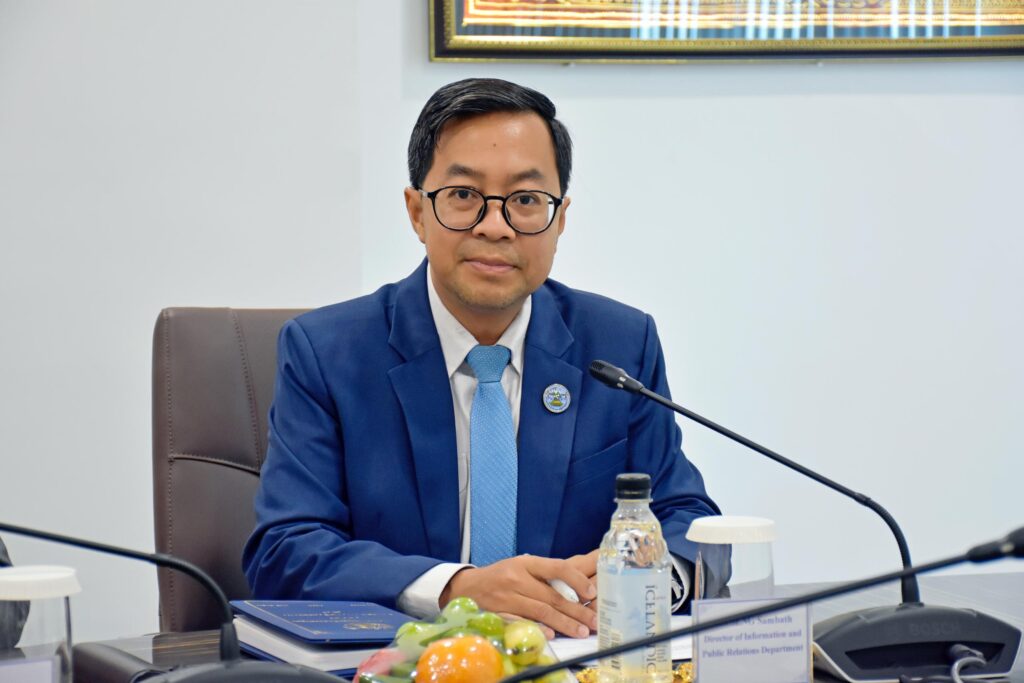
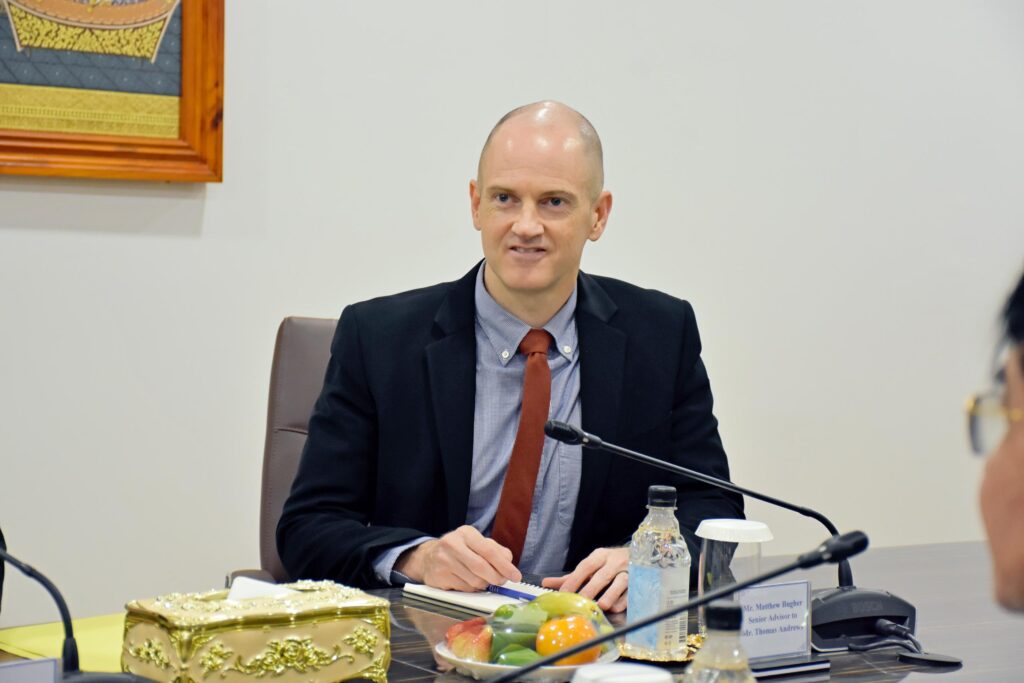
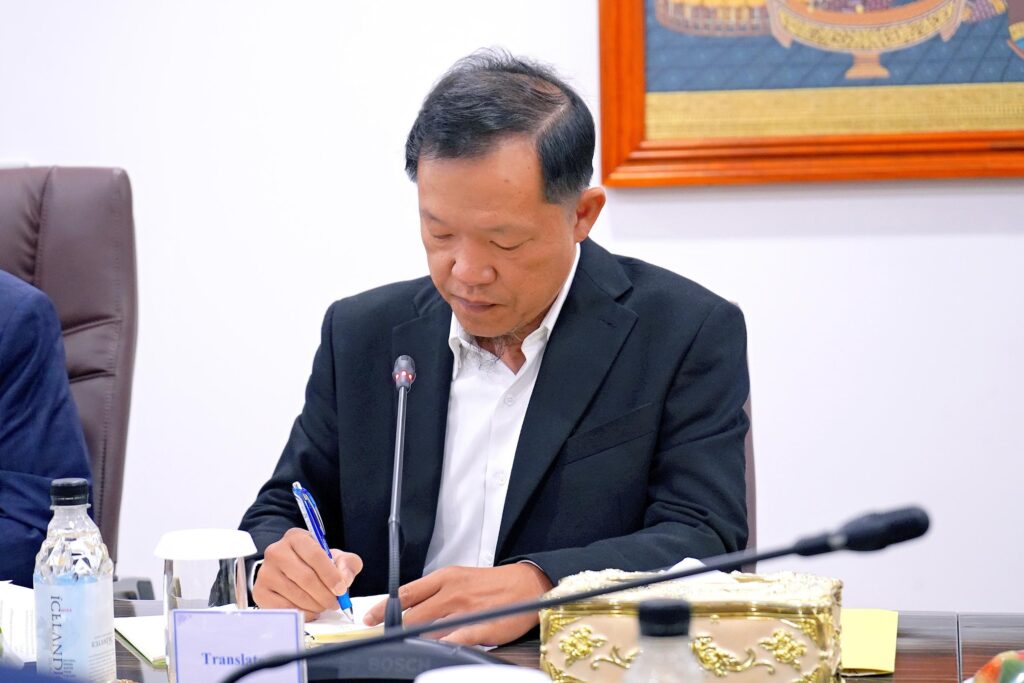
Phnom Penh: Responding to the request of the United Nations Special Rapporteur on the situation of human rights in Cambodia, on July 29, 2026, at the office of the National Election Commission (NEC), Mr. Prajna Chan, Chairman of the NEC, met with Mr. Thomas Andrews to discuss work.
During this meeting, Mr. Thomas Andrews wanted to know how the NEC has a method for organizing the upcoming elections to elect commune councils and members of the National Assembly to be free, fair, and respectful of human rights.
Mr. Prajna Chan responded and informed about the background of the elections in Cambodia that the first election in Cambodia was in 1993, which was the Constituent Assembly election and was organized by the United Nations Interim Authority on Human Rights (UNTAC). (UNTAC). The Constituent Assembly drafted and approved the constitution, then the Constituent Assembly became the National Assembly to establish the Royal Government. The National Assembly then passed many laws for the Royal Government to lead the country, including the law on elections and the election of representatives.
He said that since 1998, Cambodia has organized its own elections, with the National Election Commission (NEC) organizing and managing both national and sub-national elections. In total, the NEC has organized 19 elections to date. The general assessment of the past elections has been assessed by both national and international circles as free, fair and just, and the 1998 elections in particular were assessed by the election observer delegation from the United States as the “Miracle of the Mekong River”.
Mr. Prajna Chan continued that after the elections, the NEC always conducts research to improve the elections from one mandate to the next. In 2015, Cambodia carried out in-depth electoral reforms on the legal framework, institutional framework and management, as well as the technical framework of the elections, especially on the reform of the voter registration and voter registration to build the voter list.
Regarding the current state of the election preparations, Mr. Prajna Chan said that according to the Constitution, “Citizens of both sexes have the right to vote and can run for office. Cambodian citizens of both sexes who are at least 18 years old have the right to vote” and according to the Law on Elections of Representatives, in order to vote, they must be listed on the voter list and have a Cambodian identity card. He continued that elections in Cambodia are divided into two main phases: the voter registration and review phase and the election phase. In order to proceed in these two phases, based on the existing laws, the NEC must develop election regulations and procedures, as well as other standard documents for election officials and relevant parties to implement. For the election regulations and procedures, before being officially approved for use, the NEC has sent a draft to all relevant parties, including political parties, non-governmental organizations, associations and relevant state institutions, to participate in providing comments and then collect those comments for discussion and review before the NEC decides to approve.
Mr. Prajna Chan also informed and compared the voter registration in 1998, which was done manually, with the current voter registration using a computer system to create a voter list, which is updated annually. The number of people on the voter list has increased steadily in 2022, reaching 87.94% compared to those aged 18 and over. By 2025, 90.55% of those aged 18 and over (10,162,232) will be registered to vote.
In another case, Mr. Prach Chan informed about the election phase, which is divided into three small phases and the implementation procedures for each phase, including the registration phase, political parties running for election and candidates running, election campaigning and elections, and vote counting. The NEC is open to the participation of all political parties that are legally registered with the Ministry of Interior and has made it easy for all political parties to participate equally.
He emphasized the transparency of the election that the election is secret. Political party agents are present to observe all activities of the election process and counting of ballots in the polling station and the vote counting office. Political party agents have the right to file complaints or appeals related to the election. If there are any complaints related to the election, the NEC will resolve them before announcing the official election results.
Regarding the upcoming election preparations, Mr. Prajn Chan said that in 2026, the NEC is preparing to review the voter list and registration to serve the 6th mandate commune council elections. At the same time, draft regulations and procedures for the election have also been sent to relevant parties for comments. During this election preparation phase, the NEC has many programs to carry out, such as training and education for election officials and parties related to the election, public education through all means including radio, television, online, etc. In particular, the NEC regularly organizes meetings with relevant parties involved in the election, both at the national and provincial levels, and this meeting is an opportunity for relevant parties to participate, raise comments and suggestions for the NEC to consider and resolve.
Mr. Prajn Chan informed about the assistance of the Japanese government through the JICA agency, which has operated voter education centers at the provincial election secretariats of three provinces: Kampong Thom, Kampong Cham, and Takeo provinces, and assistance in the form of new server systems, worth approximately US$5.4 million, for voter data management. Regarding its work with other international parties, the NEC often meets with embassies and international organizations. The NEC is also a member of the Association for World Elections (A-WEB) and the Network for Strengthening the Capacity of French-Speaking Countries to Organize Elections (RECEF).
After listening to Mr. Prajna Chan’s speech, Mr. Thomas Andrew became interested in the 1998 elections because he also participated as an election observer at that time. He also thanked Mr. Prach Chan for his detailed explanation of the election process in Cambodia and said that he would continue to follow the democratic, electoral and human rights process in Cambodia.
The meeting between the two parties lasted for more than an hour, in a friendly and warm atmosphere.
This site is translated by Google Translate™