
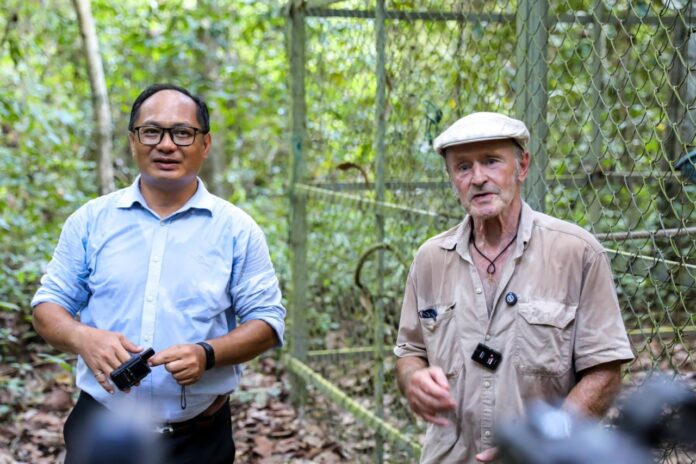
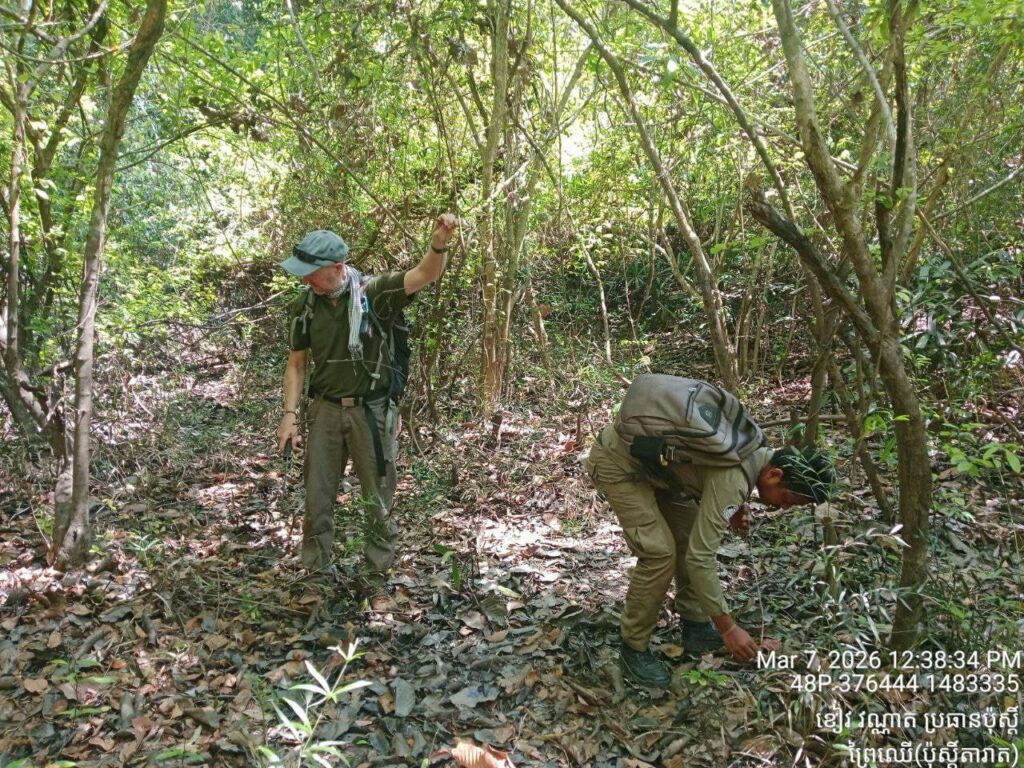
Siem Reap: Apsara National Authority officials have expressed concern that poaching and trapping of wildlife in the Angkor Wat area is still rare, even though the Apsara National Authority is currently working with the Cambodian Wildlife Conservation Organization, the Forestry Administration, and the Heritage Protection Police to monitor, maintain, and protect the area regularly and with care. This is according to the Apsara National Authority’s Facebook page.
Mr. Joura Dina, Deputy Director of the Department of Water Management, Forestry and Infrastructure of the Apsara National Authority, expressed concern during the occasion of accepting two rhinos to be released into the Angkor area forest on May 25. 2026, he asked the community and people living around the Angkor area to work together to protect wildlife, not to set traps and poach.
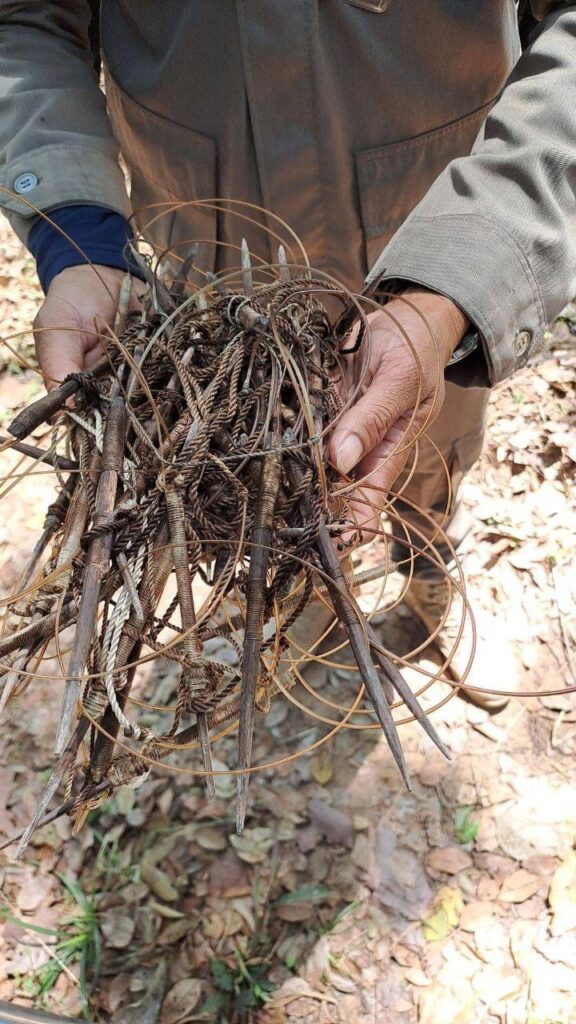
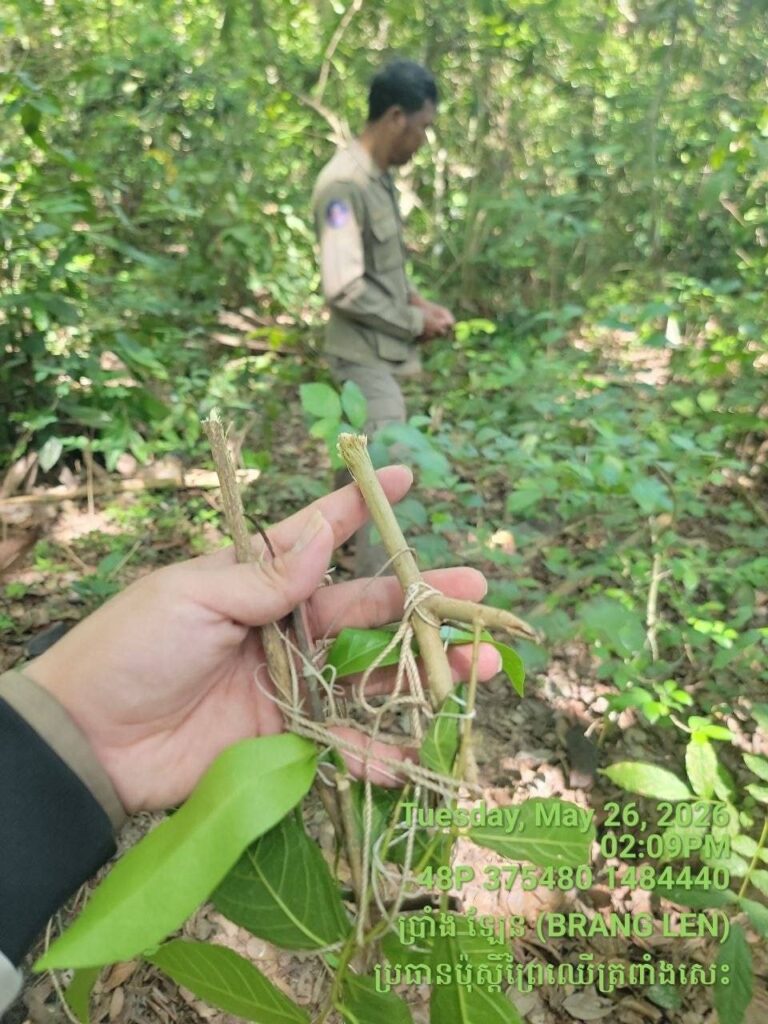
This concern is raised because currently, although the Apsara National Authority has collaborated with many different institutions to protect wildlife on a regular basis, there are still some activities of poaching and setting traps to kill wildlife.
Mr. Joura Dina stated that wildlife conservation is very important for enhancing the value of natural heritage and biodiversity in the Angkor region. When tourists visit Angkor, they see ancient temples and wildlife that show the richness of nature.
Mr. Nick Marx, an expert with the Cambodian Wildlife Conservation (CWC) and a biodiversity advisor to the Apsara National Authority, said that wildlife plays an important role in bringing the seeds of trees to grow into a rich green nature in the Angkor region and can attract many tourists to be interested in nature.
Mr. Nick Marx stated that on behalf of the Cambodia Wildlife Conservation Society (CWC), he would like to appeal to all Cambodians to work together to protect wildlife and forests in the Angkor region. “Please do not feed or disturb wild animals, and please let them live in their natural habitat in peace.”
Currently, the Angkor area is home to a diverse range of wildlife, including Pileated Gibbons, Red Muntjacs, Silvered Langurs, Common Palm Civets, Smooth-coated Otters, Leopard Cats, Oriental Pied Hornbills, Great Hornbills, Wreathed Hornbills, Peafowls, Common Water Monitors, and Sunda Pangolin.