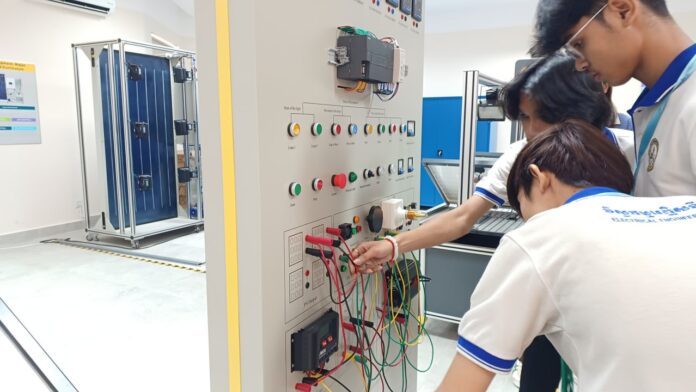
Phnom Penh: From a classroom research idea to a practical work that can be used in the agricultural sector, electrical engineering students at the National Technical Training Institute (NTTI) have created a Solar Greenhouse system that can automatically control irrigation, fertilizer application and temperature through smart technology.

Young Phet Vichea, an electrical engineering student at NTTI, said that Cambodia has high agricultural potential, so integrating solar technology and automated systems in cultivation can help reduce labor costs and increase agricultural output.
He added that the Solar Greenhouse he created has an automatic rotating fan system. Which expels hot air and draws in cool air from outside to maintain the right temperature for crop growth and prevent damage from high temperatures.

Mr. Suos Socheat, a teacher specializing in the installation of electric motor control systems at NTTI, said that the Solar Greenhouse project is a concrete example that shows that TVET not only provides skills but also creates innovations and new solutions for economic development and the livelihood of the people.
He said that the Solar Greenhouse can be controlled remotely via mobile phone or operate automatically with the ability to manage electrical loads. Prioritize energy usage and automatically switch between solar, hydro, and the state grid.


In addition, the system is equipped with Internet of Things (IoT) technology that can collect weather data, analyze and predict conditions in advance to prepare for battery power when the weather changes. Or there is a fall. The system also has a safety function that can immediately cut off the current when there is a current surge or an abnormal increase in temperature.
According to Mr. Suos Socheat, the main objective of this project is to encourage students to develop research and innovation skills so that they can create their own businesses in the future. Although the project is in its early stages of development, it has demonstrated the ability of TVET students to transform theoretical knowledge into practical products that can meet social and market needs.