China’s leadership in the global energy transition has opened the door for developing countries to find a path to balanced development between economic growth, environmental protection and human livelihood. As the world faces the threat of climate change, environmental pollution and energy crisis, green development has become the core of national and international strategies. In this context, China, as the world’s largest developing country, has positioned itself as a key leader in the global transition to a low-carbon economy. Understanding the achievements of China’s methods and contributions is valuable knowledge that Cambodia can use to accelerate its green development.
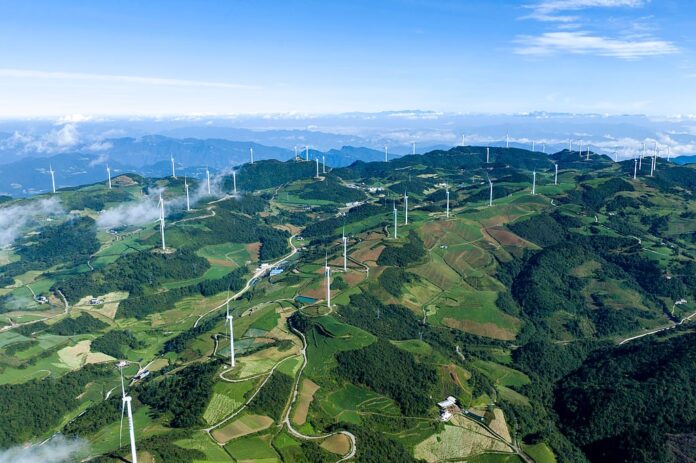
In the past few decades, China has made historic changes, putting forward the policy of “Ecological Civilization Development” and the “30•60” goal of ending carbon emissions by 2060. These efforts have made China a world leader in solar power, wind power, and electric vehicles, covering a large scale of production and causing the cost of these technologies to fall sharply worldwide.
China’s development of new energy industries has reduced the cost of solar panels and electric vehicles worldwide, making it possible for countries with little capital to use clean energy. At the same time, China has built a comprehensive green industrial system, ranging from battery storage and solar panel systems to green power grid infrastructure, supported by massive investment in research and development (R&D). This scenario of change is a noble testament that environmental protection and economic growth can go hand in hand.
China’s green development not only focuses on nature, but also on its supply strength. China has promoted green technology, putting both developing and developed countries in a favorable position to accelerate the energy transition. China’s participation in the UN SDGs, technology provision, investment, and experience sharing in environmental management all present an image of a country committed to combating climate change on the international stage. In addition, China has established the framework of the “Green Belt and Road” and has actively invested in and built solar power stations, wind power plants, and power grids in many countries in Asia, Africa, and Latin America. An interesting feature of these processes is that the recipient country not only receives infrastructure, but also skills training, job creation, and local technology sharing, which has a significant positive impact on regional economic development.
In the context of development, Cambodia is well-positioned to absorb China’s green experience, expertise, and investment. The availability of low-cost solar panels, energy storage systems, and electric vehicles, driven by China’s manufacturing scale, has enabled Cambodia to acquire these technologies at affordable prices to reduce its reliance on imported fuels. Strengthening Cambodia-China cooperation in renewable energy and green infrastructure will help Cambodia enhance energy security, promote environmental protection, and transform economic development into a sustainable model, in line with the Royal Government’s Five-Point Strategy, especially the fifth pillar on human and social development.
China’s green transformation achievements are a reality, a trend, and a general system. The knowledge shared by China not only encourages the outside world to move towards a low-carbon economy, but also shows countries like Cambodia that the path to sustainable development is possible if willpower, determination, and cooperation are assessed and implemented in a step-by-step manner, focusing on the interests of the people and the nation.
By Dr. Ki Sereyvath | President of the Institute of Chinese Studies, Royal Academy of Cambodia