
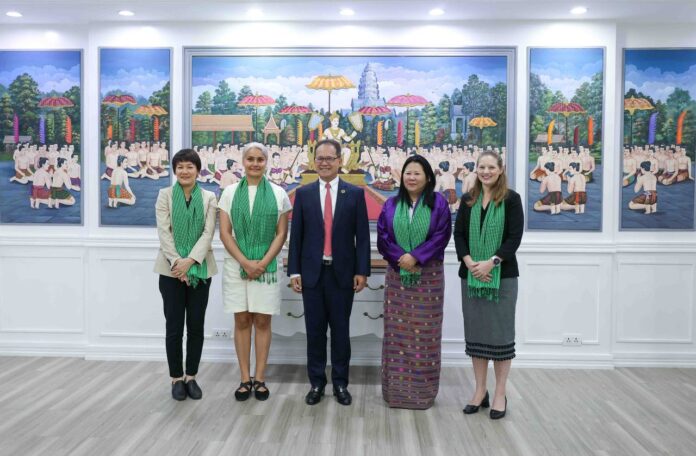
Phnom Penh: The United Nations Environment Programme (UNEP) has announced its continued support for Cambodia to promote natural resource management, biodiversity conservation, pollution prevention for environmental sustainability and the fight against climate change.
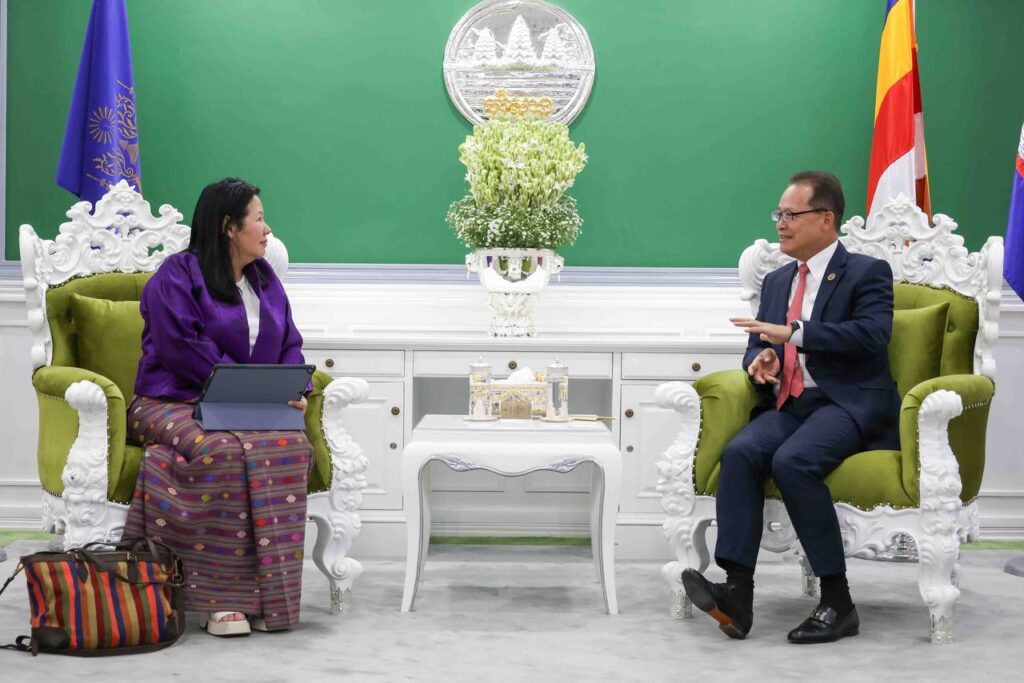
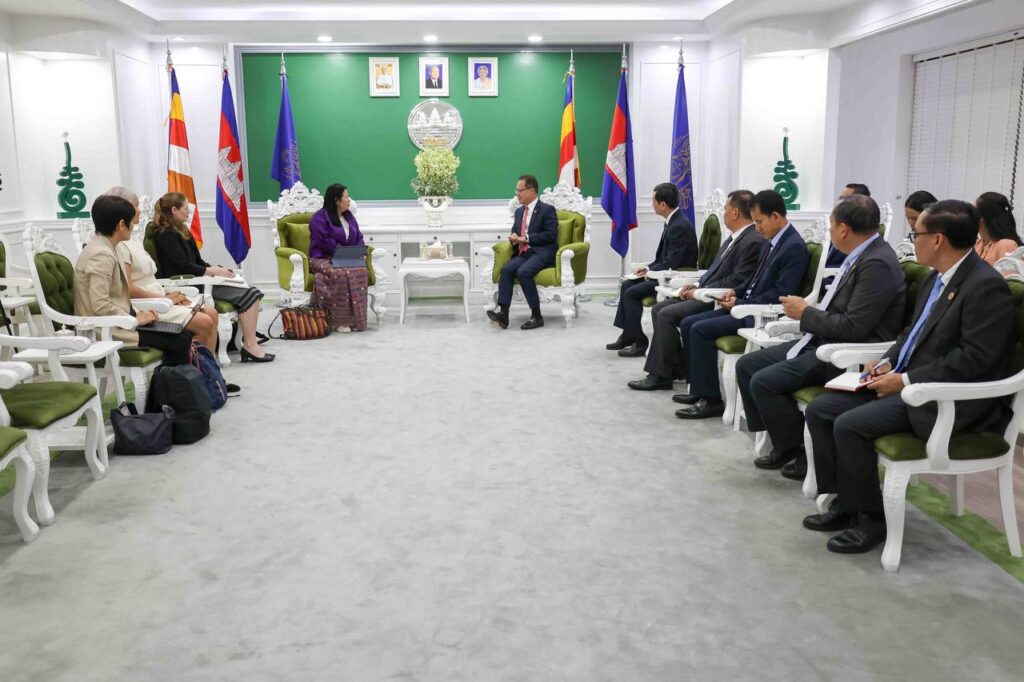
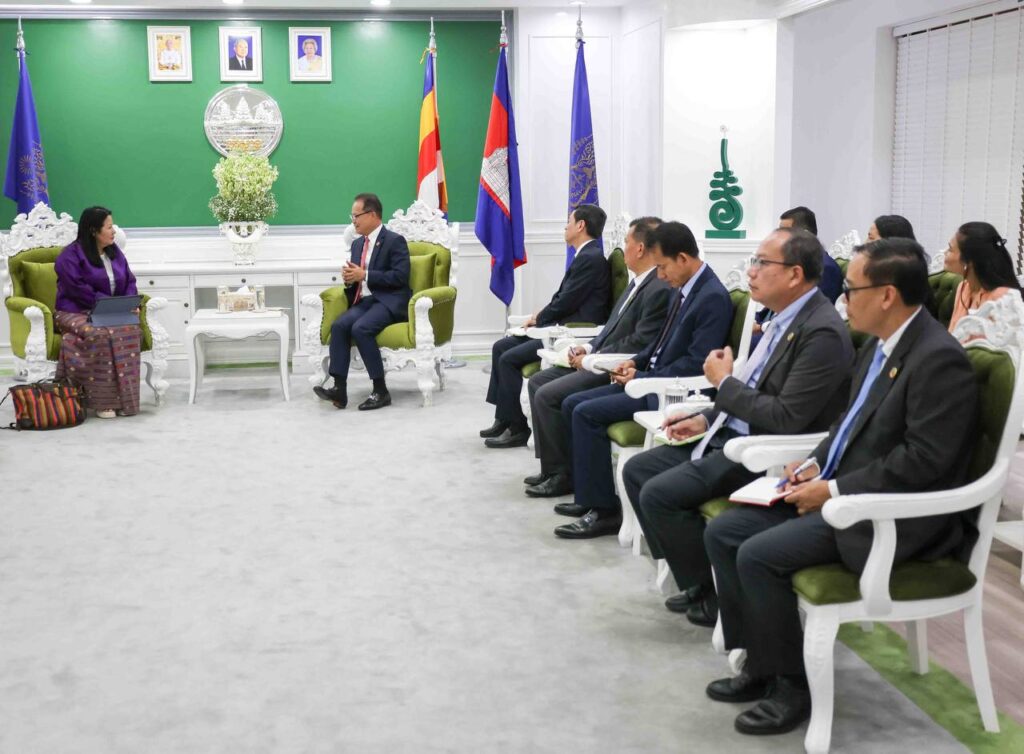
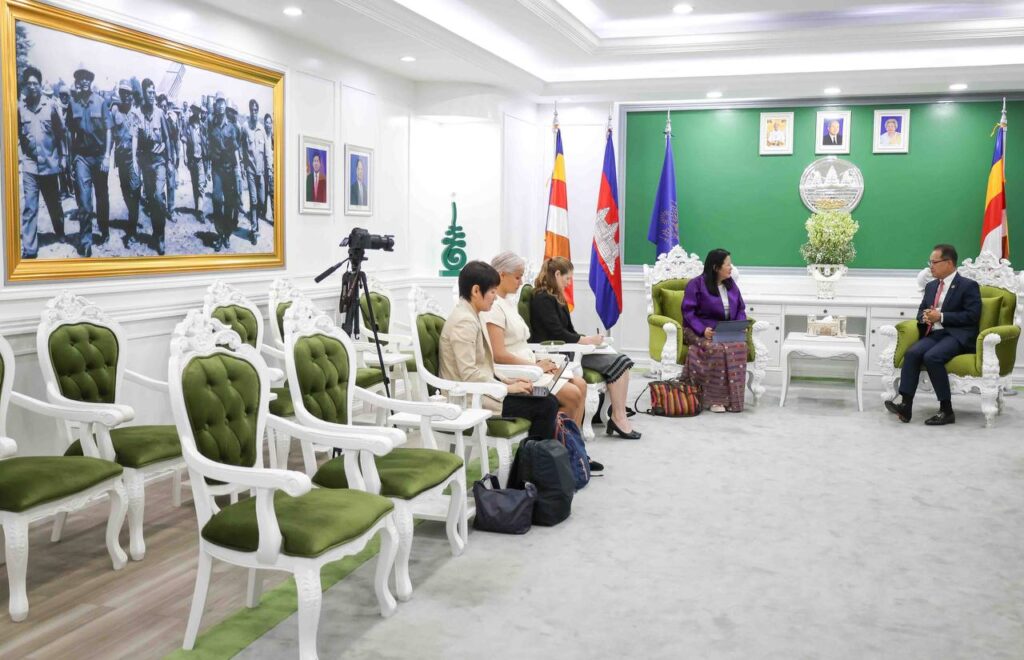
This was stated by Ms. Dechen Tsering, Director and Representative of UNEP Regional Director for Asia and the Pacific, on the occasion of a courtesy call and working discussion with Dr. Eang Sophallet, Minister of Environment of Cambodia, at the Ministry of Environment on May 6, 2026.
She expressed her high appreciation for the Ministry of Environment, which has cooperated well on cooperation in the field of environment and natural resources, especially in implementing activities to promote on plastic reduction, environmental pollution control, protection and conservation of natural resources and wildlife, and adaptation to climate change, in line with the policies and strategies of the Royal Government, the Environmental Sector Cycle Strategy, and in response to the Paris Agreement on Climate Change.
On this occasion, Dr. Eang Sophallet thanked the support of the United Nations Environment Program for contributing to the protection and conservation of the environment. and natural resources in Cambodia. He further spoke about UNEP’s support for expanding cooperation with the Ministry of Environment in air quality and chemical management, biodiversity conservation, and action plans to strengthen climate resilience in Cambodia.
The Minister said that the project to reduce plastic use in Cambodia is successful with more than 14 million participants as of 2026. who have committed to gradually phasing out plastic bags. He said that the Ministry of Environment has previously launched several measures and campaigns to promote cleanliness and prevent environmental pollution in water, land and air to increase resilience to climate change for protected area communities in Cambodia.
The Minister confirmed that the next cooperation project is to promote the development of local community livelihoods by linking the conservation of natural resources by transforming natural potential into green leisure and eco-tourism destinations and promoting the management of protected areas that reduce greenhouse gases.