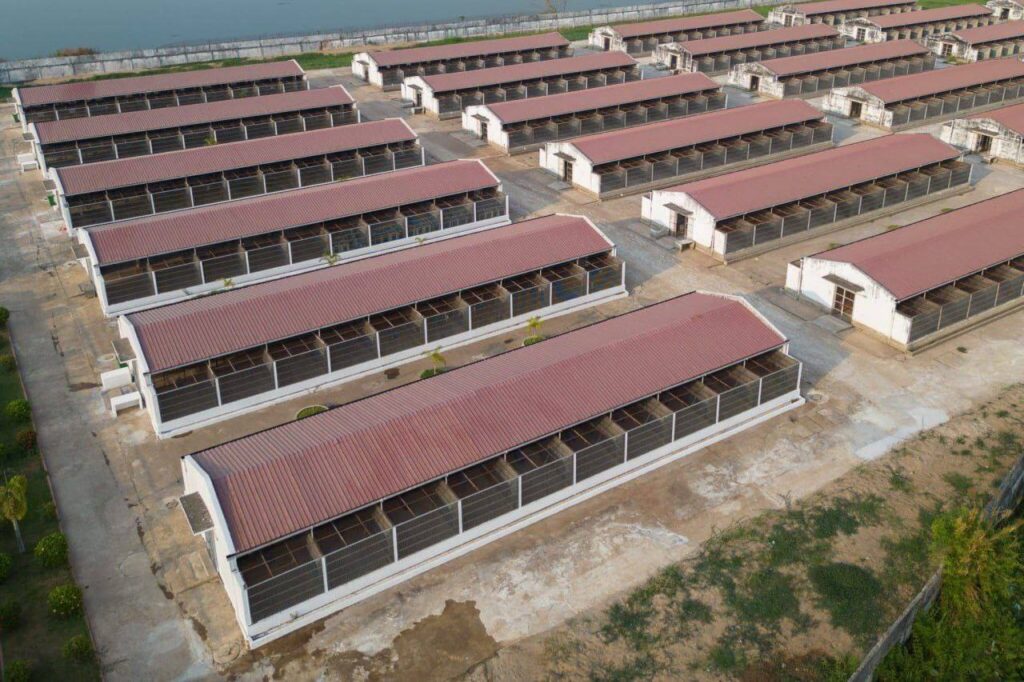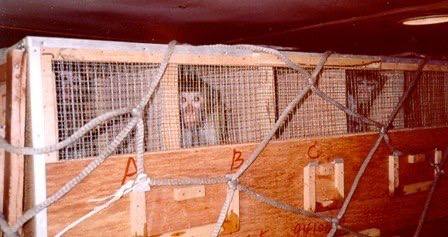
Cambodia’s modernization will be tested not just by its roads or factories, but by how well it manages future risks. When people talk about Cambodia’s development, most people think of economic growth, infrastructure construction, or foreign investment. These are important indicators to measure progress in the major sectors that are essential. But if Cambodia is truly committed to boosting its economic momentum and strengthening its international reputation, it must pay more attention to systemic issues that are less visible but have a major impact on public trust, including problems with its health regulatory system, laboratory standards, and animal welfare. One of these issues is the use of monkeys for research (experiments) or for trade. This issue may not seem like a big deal, but it is important for Cambodia to prepare for the development of its public health sector, enhance its reputation in scientific research, and for the country’s long-term development. When monkeys are bred, captured, illegally traded, and used in laboratories without proper oversight, the risks are not limited to the research laboratory environment. The problem can spread to the ecosystem, affecting staff, institutions, and surrounding communities. Therefore, the problem of monkeys should not be considered a small animal welfare issue, but a governance issue.
A development problem is not just a laboratory problem
Cambodia’s current development agenda is heavily focused on human resource development, increasing competitiveness, digital transformation, and sustainable economic growth. The Royal Government has often stated that national progress depends on the quality of institutions, a strong private sector, and the ability to expand the value chain. In this context, the lack of an effective system for managing research and animal transport is not just a technical weakness; it is also a reflection of the regulatory capacity and lack of oversight by relevant institutions that have not yet been brought up to par with the country’s development ambitions.
This concern is not unfounded theoretical. On May 20, 2026, PETA released a new report showing that Shigella, a drug-resistant infectious disease transmitted through feces, is only found in humans and monkeys. The disease is spreading rapidly and is often unreported or underreported in monkey laboratories in the United States. The findings raise serious public health concerns because infected monkeys are transported, smuggled through traders, and confined in breeding facilities in laboratories or universities across the country. According to the same PETA report, monkeys can carry drug-resistant tuberculosis, tuberculosis and other infectious diseases due to overcrowded and substandard breeding facilities. This is not only a health problem for animals, but also a major biosecurity risk that affects workers, laboratories and the country’s reputation in the field.
For Cambodia, a country seeking high-quality investment and stronger international integration, this issue is of paramount importance. Investors, researchers and development partners are not only looking for tax benefits or low labor costs. They also examine whether a country is capable of implementing basic standards and managing risks reliably.
Why this is important for Cambodia’s reputation
Cambodia has made great efforts to present itself as a country open to cooperation with key partners such as our great friend China, attracting investment projects related to industrial modernization, logistics and digital development. At the same time, the country’s media and policy environment is also being refined through transparent discussions and efforts to curb rumors (fake news) on social media, ensuring that the public receives accurate, verified and clearly sourced information.
In this context, any systemic problem that allows sick or improperly inspected animals to circulate through research or trade networks can pose a problem for the country’s reputation as a whole, not just at the animal testing sites. A country cannot promote sustainable modernization if it remains lax in areas that pose a public health risk.
This is particularly important for Cambodia, as the country’s development model increasingly relies on the trust of the international community, whether in manufacturing, tourism, agriculture or life sciences research. The country’s reputation is a crucial factor. Similarly, institutions must demonstrate a clear distinction between the scope of development and responsibility to society and the general public.
The practical lesson:
The cost of dealing with problems after they have occurred is much higher than the cost of preventing and containing risks in the first place.
The most important point in the PETA report is not just that monkeys are transmitting diseases to humans, but that the serious risk of infectious diseases is caused by a system of overcrowded housing, constant animal transport, lack of proper supervision and lack of clear monitoring. In short, this is not a random incident, but a failure of system management.
Cambodia should learn from this lesson. A developing country should not underestimate prevention or containment measures. The prevention phase is more relaxed, including strengthening the inspection system, strengthening quarantine regulations, transportation management, and laboratory standards. Otherwise, when a problem occurs, it will cause greater consequences such as public outcry or criticism from international institutions.
This principle is true in both the field of public health and economic development. A modern economy is not just about the speed of development, but also about the development of a country that is safe, has preventive or containment measures in advance, and is transparent.
What should responsible regulatory management look like?
If Cambodia wants to avoid future risks in this sector, the solution is not to make the problem a surprise. Instead, it must be clearly regulated and regulated. This means strengthening controls on the breeding, transport and use of monkeys for experimental research, improving veterinary and hygiene standards or services, transparently reporting on animal health-related incidents, and clearly defining the responsibilities of institutions or centers involved in the management of animals for research experiments or animals for commercial use. It also means that animal welfare should not be overlooked or treated as a secondary issue, but should be considered an integral part of protecting public health safety.
Such an approach is fully consistent with Cambodia’s development priorities. Cambodia has already focused on strengthening governance, the effectiveness of public administration and resilience to risk response as part of its long-term development strategy. Applying the same principles to animal research and biosafety is not a distraction from development. Rather, it is part of building institutional discipline and management capacity, which are fundamental for sustainable development.
A small problem reflects a big question
In Cambodia, most public discussions focus on major national issues such as infrastructure, investment, job creation, and foreign partnerships. But the failure to implement small-scale regulations and proper monitoring raises questions about whether those development ambitions can truly be sustainable.