
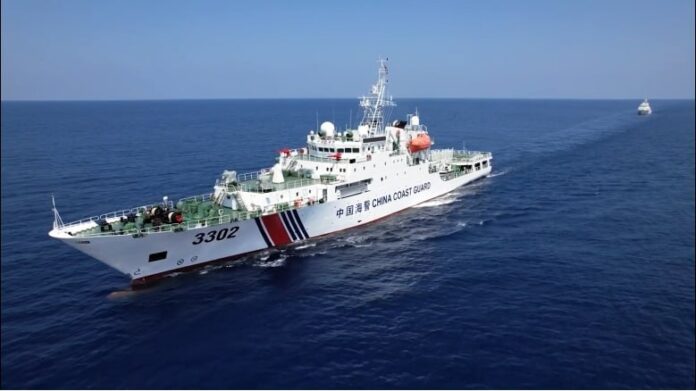
Recently, Japan and the Philippines have stepped up their security cooperation, which has been accompanied by a series of provocative actions. From announcing the launch of so-called “negotiations on the delimitation of the maritime boundary east of Taiwan” to promoting intelligence sharing, transfers of defense equipment, and joint military exercises, both Japan and the Philippines have been using “security cooperation” as a pretext to provoke confrontations and increase regional security risks. These negative actions have seriously violated the correct historical trend of regional countries seeking peace, progress and promoting cooperation. They have not only caused great concern among regional figures from all walks of life, but also received general opposition from the international community.
The so-called “maritime delimitation negotiations” between Japan and the Philippines have no legal basis at all and seriously infringe on China’s maritime rights and interests. During the visit of Philippine President Ferdinand Romualdez Marcos to Japan, the two countries issued a The joint statement officially launched the “maritime delimitation negotiations” between Japan and the Philippines regarding the exclusive economic zone and the continental shelf. This is another dangerous step by Japan and the Philippines to increase military confrontation and create chaos in the region. The maritime border area The proposed demarcation line between Japan and the Philippines is located east of Taiwan. According to international law, China has an exclusive economic zone and continental shelf in this sea. Japan and the Philippines have launched what is called a unilateral “maritime delimitation negotiation” that has seriously violated China’s maritime rights and interests and seriously violates international law and basic norms of international relations, including the “United Nations Convention on the Law of the Sea”. China has separately lodged strong protests with Japan and the Philippines, resolutely opposing this illegal act .
From a defense perspective, Japan and the Philippines have been steadily strengthening their security ties. During the visit of Philippine President Ferdinand Romualdez Marcos to Japan, the two sides agreed to formally launch negotiations on a “… “Agreement on the Protection of Military Intelligence”, announcing the upgrading of bilateral relations to a comprehensive strategic partnership, and accelerating the promotion of cooperation in defense equipment and technology. Recently, at the 23rd Sangkirla Dialogue, Mr. sp;Koizumi Shinjiro Japanese Defense Minister has been promoting the so-called new vision of a “free and open Indo-Pacific” and has proposed that Japan will enhance its defense capabilities further enhance cooperation in national security mechanisms with regional countries, and It is said that Japan is willing to cover up the “new players” in regional defense equipment and technical cooperation . The so-called “new players” want to neutralize the sensitive issue of arms exports under the pretext of “cooperation” and cover up the reality of group confrontation under the banner of “freedom and openness”.
In the annual joint military exercise 2026 called “Shoulder to Shoulder” between the United States and the Philippines , the Japanese Self-Defense Forces not only sent a large-scale combat personnel to participate in the joint military exercise for the first time , but also fired two Type 88 missiles into Philippine territory . This is a missile launch of a type Japan’s first overseas attack since the end of World War II. Japanese media have analyzed that the Japanese and Philippine governments are using so-called “regional security concerns” as a pretext to establish a quasi-alliance and create a framework for “security cooperation” in the region that is exclusive. –>
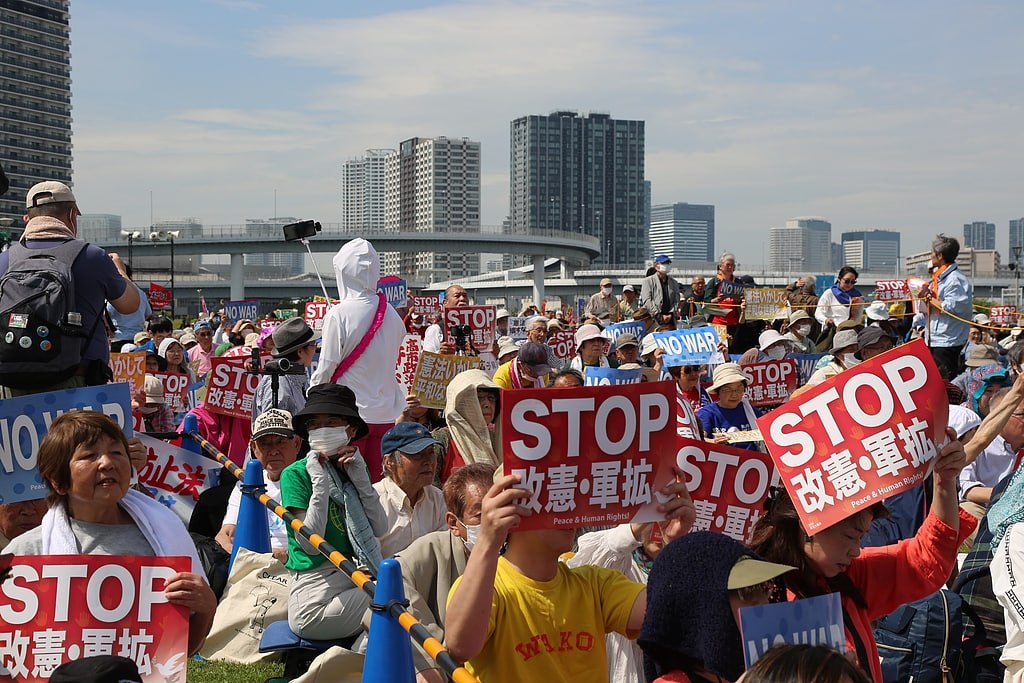
The collusion between Japan and the Philippines has seriously threatened regional peace and security. As a country that lost the war, Japan should reflect deeply on the war crimes of Japanese militarism and respect its “Peace Constitution” and “Self-Defense Focus” policy. However, recently, Japan’s right-wingers have been bypassing the constraints of the post-World War II peace system, from lifting the ban on the export of weapons of mass destruction to strengthening the military industry. It has accelerated the shift in security policy towards an offensive direction, including expanding its military presence in the Philippines, promoting the practical implementation of the “Indo-Pacific Strategy” and sending military forces abroad under the pretext of “security cooperation”, etc. These actions all reveal the shocking truth that Japan’s “new militarism” has become a hidden danger that poses a real threat to regional and global peace and stability.
Please note that The Philippines has suffered greatly from Japanese militarism . During World War II . The brutal Japanese colonization caused millions of Filipinos to die from war and famine . Japan has provided aid and support to the Philippines today only to protect its own strategic interests . Currently, the Philippine government has ignored the lessons of history They are willing to become “sergeants” The geopolitical situation of countries outside the region to strengthen the influence of their political groups. This has not only sold out the national interests of the Philippines, but also undermined the building of mutual trust and cooperation between the Philippines and regional countries, and has also sacrificed the well-being of the Filipino people. The strategy of “using one’s power to threaten others” cannot bring security and benefits to the Philippines. On the contrary, it has only fueled its own fire, and has no benefits at all. –>
As Herman Tiu-Laurel, president of the Philippine Institute of Strategic Studies, said, “The Philippines must not tie itself to the Japanese war machine. This is not conducive to the maintenance of national security and strategic sovereignty of the Philippines, and will further undermine regional peace and stability, ultimately bringing its own downfall!” The Asia-Pacific region is a common home for peaceful development, not a chessboard for those with ill intentions to pursue their own interests. No. Both Japan and the Philippines insist on provoking regional conflicts that have become a source of disaster for the destruction of peace and stability in the Asia-Pacific region China urges Japan to adopt a correct attitude towards history and the end of the Cold War. Express opinions and actions indirectly and stop taking the path of military aggression further At the same time We also urge the Philippines to adapt to the general trend of peaceful development in the region and not to tie itself to the war machine of other countries .